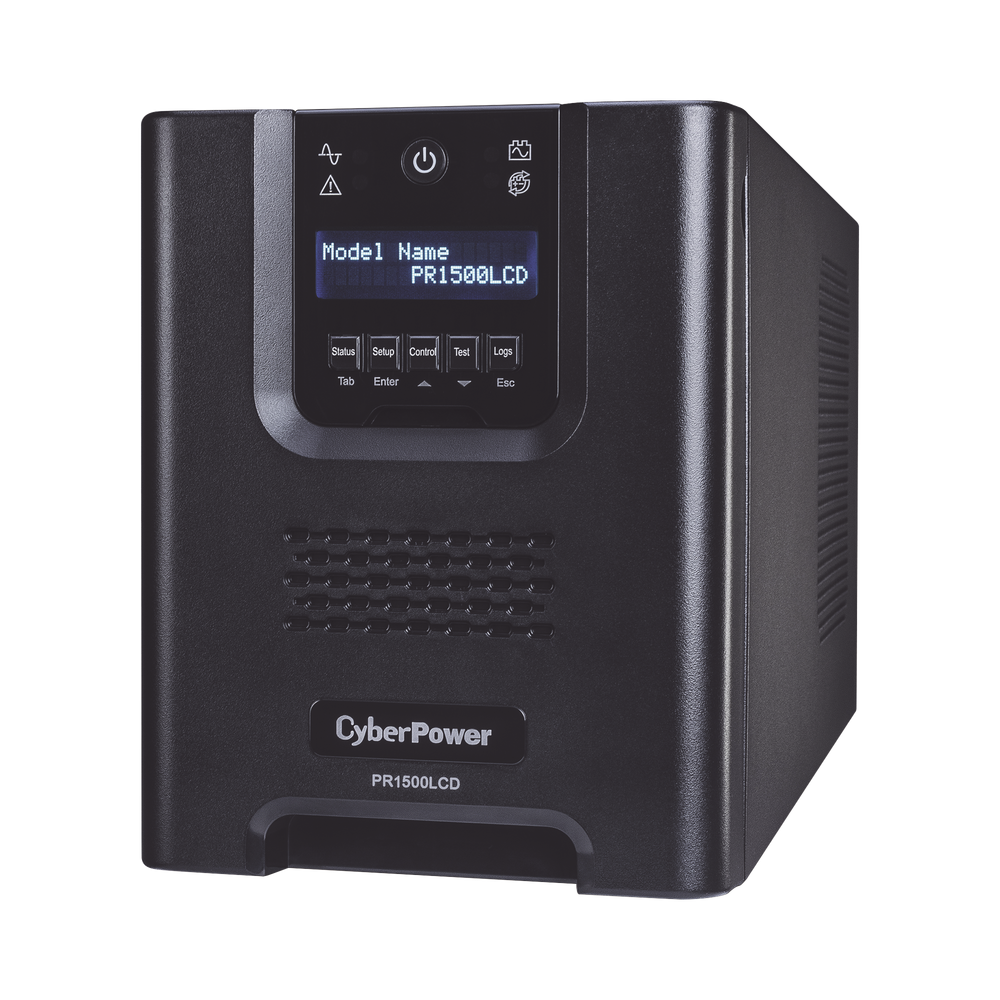
Picobox REX: Facility Monitoring That Fits in Your Hand
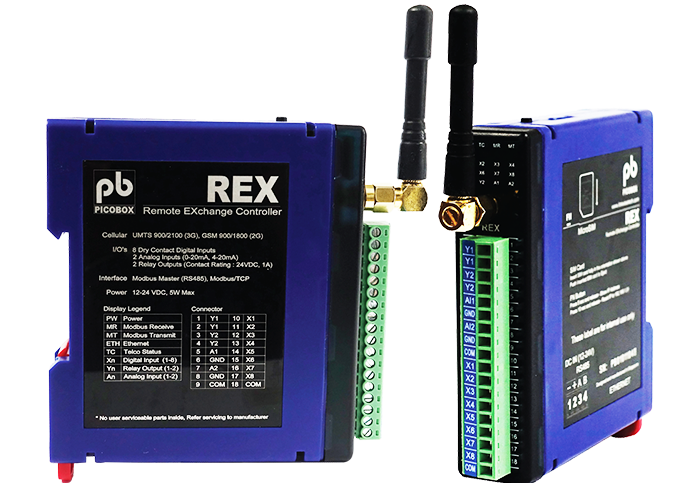
Most server rooms have protection. Very few have visibility.
A UPS guards against power loss. A surge protector absorbs spikes. But neither device tells you what is happening right now — load levels, input voltage, ambient temperature, or whether a dry contact just opened at 2 a.m. on a Sunday. That gap between protection and visibility is exactly where the Picobox REX sits.
What the Picobox REX Is
The REX is a compact, DIN-rail-mounted remote environment controller built by Linkwise Technology. It monitors digital and analogue inputs across your facility — dry contacts, temperature and humidity sensors, power status, relay outputs — and pushes instant alerts via SMS and email the moment something changes outside normal parameters.
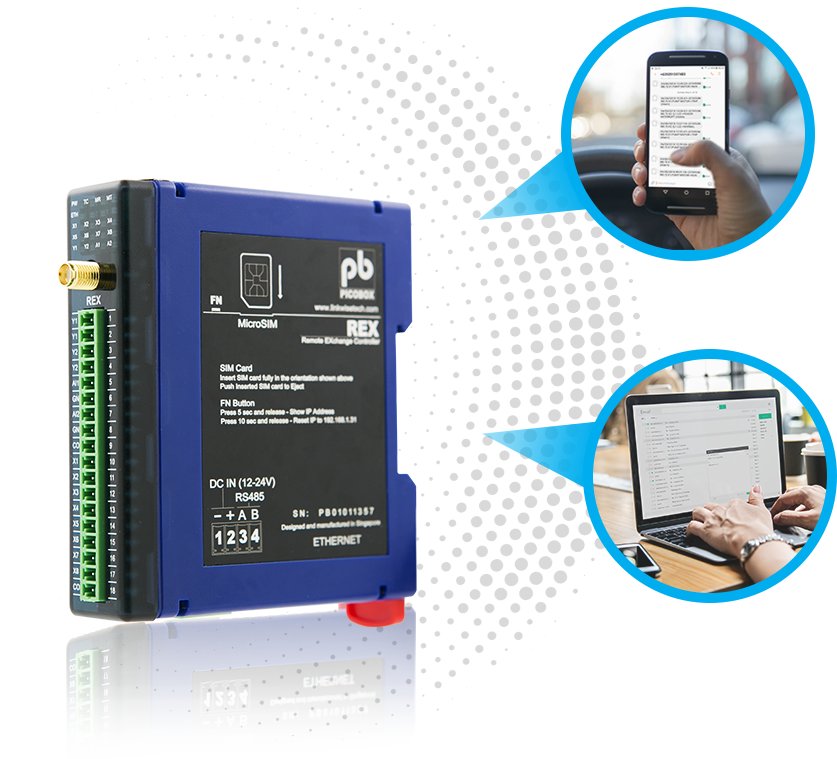
It is not a cloud-dependent platform. There is no subscription, no vendor lock-in, and no remote server that goes offline during a network incident. The REX operates as a stand-alone alarm controller — it does its job whether or not the internet is available, and the web interface runs directly from the device.
Who Needs It
If you manage any of the following, the REX was built for your environment:
- Server rooms and data centres with UPS systems, PAC units, or generator sets
- Electrical rooms with critical breakers, rectifiers, or PDUs
- Remote facilities — cell towers, substations, warehouse offices — where on-site staff are not always present
- Cold storage or pharmaceutical environments where temperature excursions carry regulatory consequences
The common thread: equipment you cannot afford to have fail silently.
Core Features
Up to 50 Monitoring Points
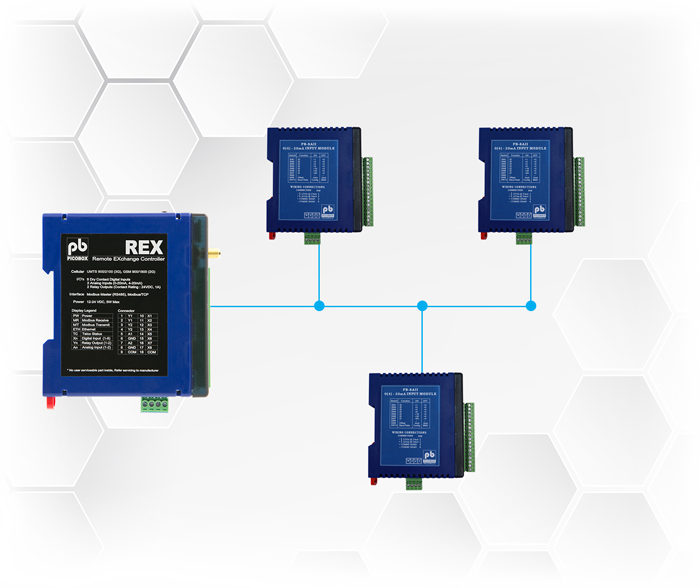
The base REX unit supports 8 digital (dry contact) inputs, 2 analogue inputs, 2 relay outputs, and 2 analogue (4–20mA) outputs. When your facility grows, expansion modules — specifically the DAQ units — extend coverage up to 50 monitoring points over RS-485, all managed from the same device and dashboard.
SMS and Email Alerts — Local and International
When a threshold is breached or a dry contact triggers, the REX sends an alert immediately. SMS delivery works on local and international numbers. Email destinations are configurable per alarm, letting you route a UPS bypass fault to the power team and a temperature alarm to the data centre manager — without waking everyone for every event.
LED Status Indicators
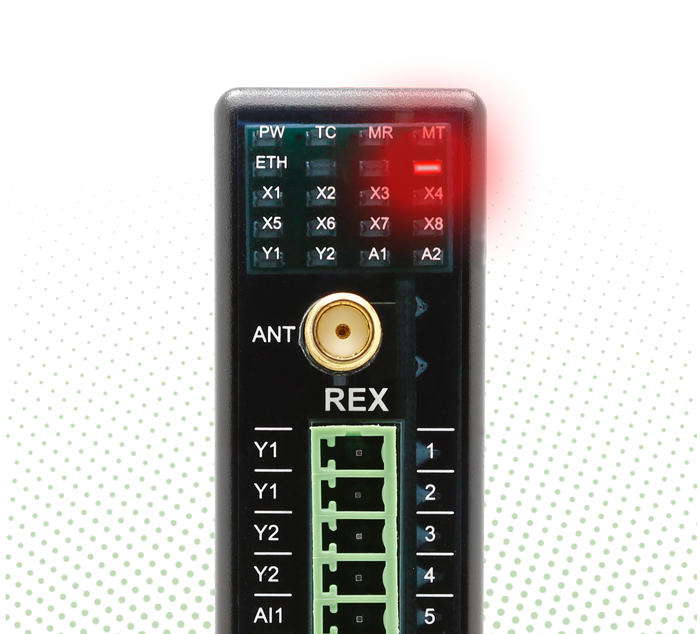
The front panel carries five LED indicators that surface real-time device status without needing a laptop: Power, Telco (GSM/LTE), Modbus, Network, and I/O state. Two additional LED sequences display the device's IP address and MAC address — a small but practical feature when you need to access the web UI from a new device and cannot recall the IP you set during installation.
Web-Based Dashboard — No Software to Install
The user interface is entirely browser-based and open source. Access it from any device on the same network: laptops, workstations, tablets, or phones. The dashboard shows current input/output states, event history, signal strength, and alarm configuration — in real time.
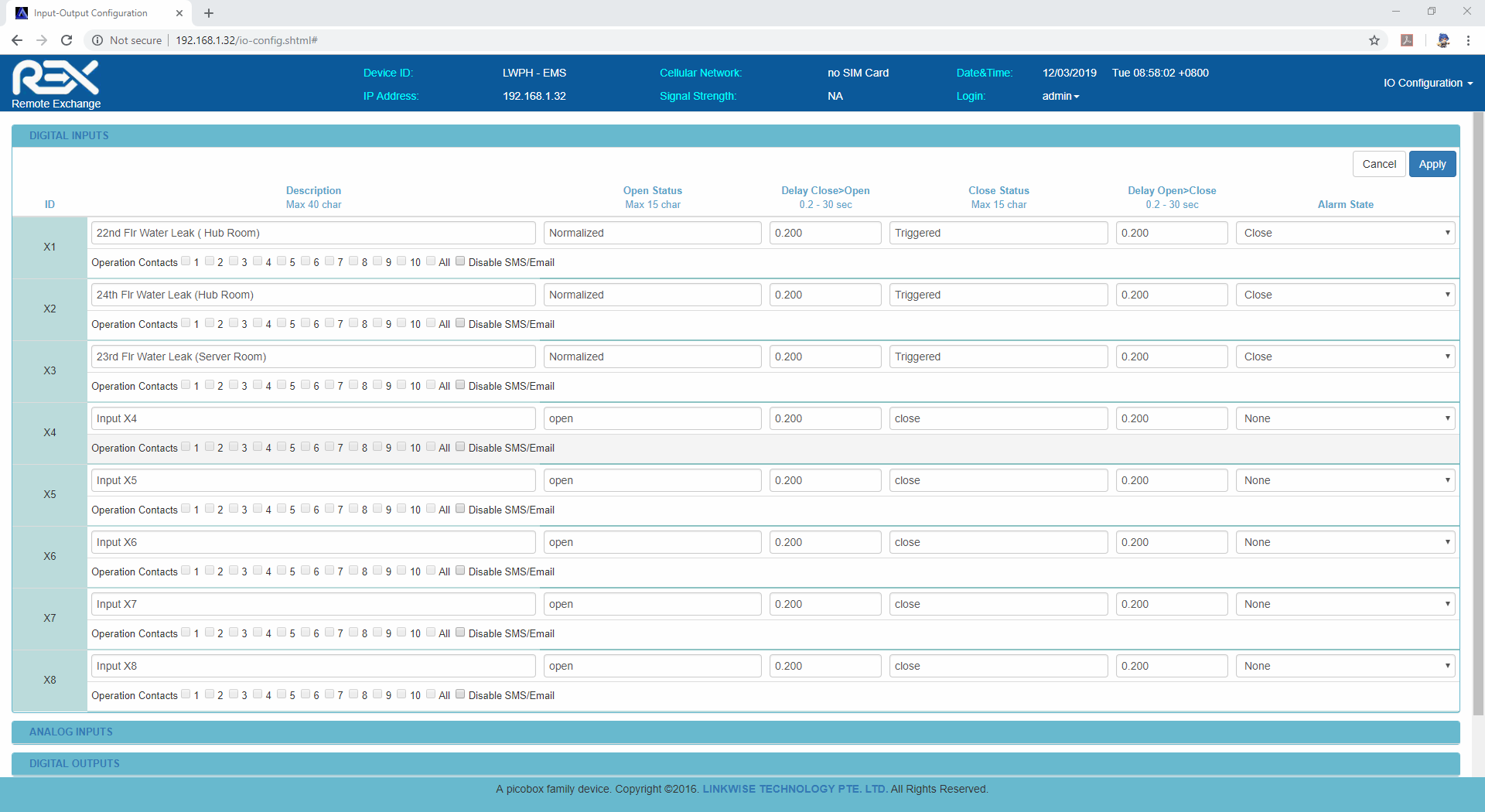
Event logs are exportable in XML and CSV format, making them compatible with any reporting workflow — spreadsheets, SIEM tools, or a simple email to management after an incident.
Remote Control via SMS Commands
Relay outputs can be toggled remotely using predefined SMS commands — allowing authorised personnel to remotely cycle power to a device, trigger a generator test, or close a security contact from anywhere with mobile coverage. Logic expressions let you automate relay responses based on input state combinations.
Installation
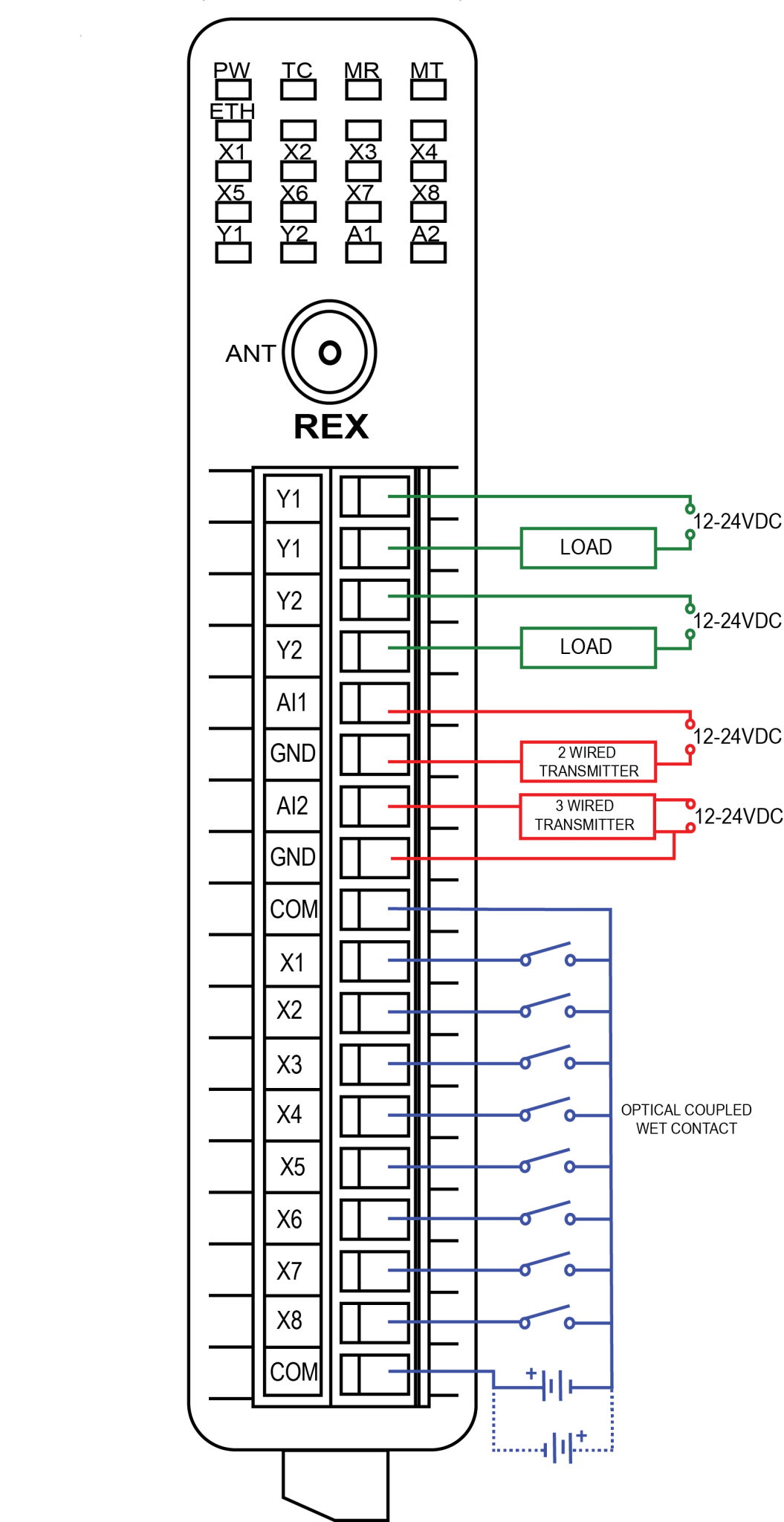
The REX runs on DC 12–24V and mounts on a standard DIN rail. Wiring follows a straightforward terminal block layout: digital inputs on the right column, analogue inputs and relay outputs on the left, RS-485 at the base for expansion modules.
The SIM card slot accepts a standard MicroSIM (push-in, no tray). Once inserted and powered, a one-time network setup is all that is needed. The device's FM button cycles through IP and MAC address display on the LEDs if you need to confirm the address post-installation.
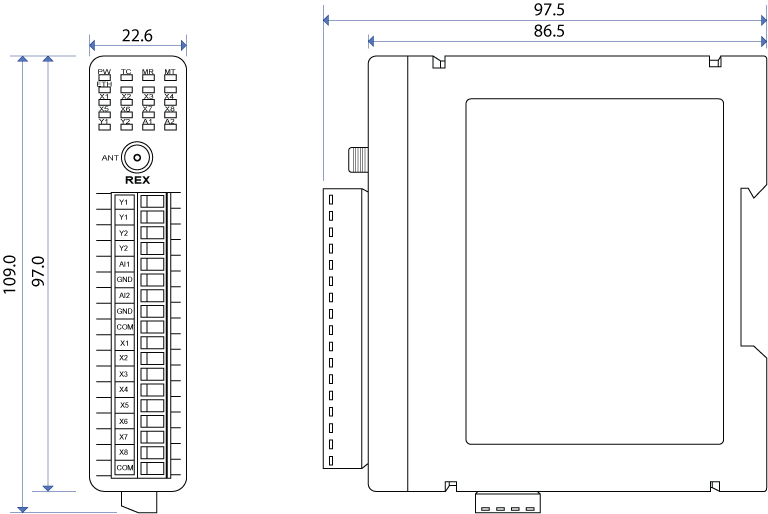
Physical dimensions: 22.6 mm wide × 109 mm tall × 97.5 mm deep — compact enough to sit inside a standard electrical enclosure alongside terminal blocks and DIN-rail breakers.
Technical Specifications
| Parameter | Specification |
|---|---|
| Power input | DC 12–24V |
| Digital inputs | 8 × dry contact (optocoupled) |
| Analogue inputs | 2 × (4–20mA / 0–10V) |
| Relay outputs | 2 × (NO/NC) |
| Analogue outputs | 2 × (4–20mA) |
| Expansion | RS-485 (Modbus RTU), up to 50 points via DAQ |
| Connectivity | Ethernet (RJ-45) + GSM/LTE (MicroSIM) |
| Alert methods | SMS (local and international) + Email |
| User interface | Web-based, no software required |
| Log export | XML, CSV |
| Dimensions | 22.6 × 109 × 97.5 mm |
| Mounting | DIN rail |
What Technica Deploys It With
Technica typically deploys the Picobox REX as part of a broader facility monitoring solution alongside:
- PROLINK UPS systems — dry contact output from the UPS connects directly to a REX digital input, giving you instant SMS when the UPS transfers to battery or develops a fault
- Linkwise THS temperature and humidity sensors — connect via analogue or RS-485 to provide environmental monitoring in the same dashboard as your power alarms
- Picobox FMGUARD — for facilities requiring a managed, always-on monitoring service layer on top of the REX hardware
The result is a single pane of glass for every alert that matters: power, environment, and equipment state — with no dependency on cloud platforms or annual software licences.
Getting a Quote
The Picobox REX is available through Technica Solutions Inc. as a standalone unit or as part of a configured facility monitoring solution. If you are starting from a blank slate, we can conduct a site assessment to map your monitoring points and recommend the right expansion module count and sensor types before any hardware is ordered.
Talk to our Power Systems team →