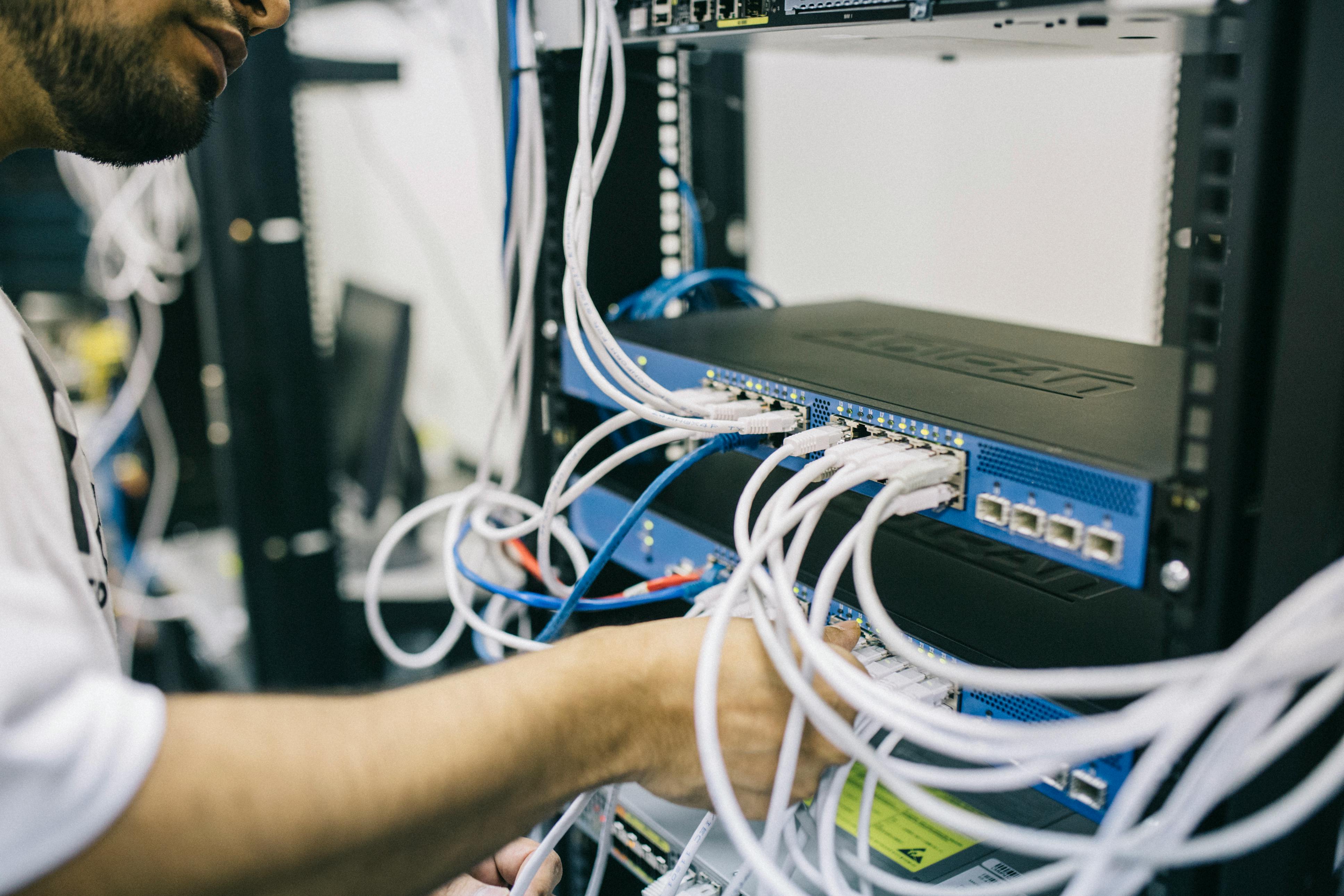
HPE Aruba Networking in the Philippines: CX Switches for Campus and SME Deployments
Most Philippine IT teams still think of Aruba as a Wi-Fi brand. That framing is a decade out of date. HPE Aruba's CX switching line is a full enterprise campus networking platform with its own operating system, cloud management plane, and a product range from unmanaged SME access switches to 100GbE data centre aggregation.
For Philippine organisations evaluating campus network upgrades in 2026, Aruba CX deserves a direct comparison with Cisco Catalyst — not as a budget alternative, but as a credible primary platform.
The Aruba CX Switch Family
Aruba organises the CX line by deployment tier, from access edge to data centre core.
CX 6000 Series — Access Tier Entry
The CX 6000 is aimed at small Philippine offices and branch locations upgrading from unmanaged or consumer-grade switches. Available in 24-port and 48-port gigabit configurations with and without PoE. Simple managed — VLAN, QoS, port security — without the full AOS-CX software feature set. Appropriate for standard Philippine office environments where advanced configuration is not required.
CX 6100 Series — Managed Access
The CX 6100 introduces full AOS-CX management, stacking up to 10 units, PoE+ for IP phones and Wi-Fi 6 APs, and multi-gigabit uplinks. This is the correct tier for Philippine offices with structured cabling, managed Wi-Fi infrastructure, and distributed access layer requirements.
At 24-port and 48-port gigabit with 4× SFP+ uplinks, the CX 6100 covers the majority of Philippine SME and mid-market access deployments. PoE budget of 370W for PoE+ models supports a typical floor of IP phones and Aruba or third-party Wi-Fi APs.
CX 6200 Series — Advanced Access with High Availability
The CX 6200 adds virtual switching extension (VSX) — Aruba's active-active redundancy framework — and higher PoE budgets (720W). Designed for Philippine deployments where access layer redundancy matters: hospitals, financial institutions, university buildings where a switch failure affects a significant number of users.
CX 6300 Series — Distribution and Aggregation
The CX 6300 is an aggregation-layer switch for Philippine campus networks — connecting access-tier stacks to the campus core. Multi-gig uplinks (25GbE and 100GbE SFP options), full VSX support, and hardware-level QoS make it appropriate for Philippine university campuses, large hospital networks, and enterprise headquarters aggregation.
CX 8360 — Core and Data Centre
The CX 8360 is a high-density 10/25/100GbE switch for Philippine data centre top-of-rack and campus core deployments. Not a common SME purchase — relevant for Philippine enterprises building or upgrading data room spine-leaf architecture.
AOS-CX: The Operating System
AOS-CX is the key differentiator that separates Aruba CX from legacy HPE ProCurve and most competitors at the SME tier.
Python scripting built in — AOS-CX includes a Python interpreter on the switch. Network teams can write automation scripts that run directly on the device without an external controller. For Philippine IT teams that are beginning to adopt infrastructure-as-code practices, this is a meaningful capability.
REST API — every AOS-CX function is API-accessible. Configuration, monitoring, and troubleshooting can be driven programmatically. Integrates with Ansible, Terraform, and custom automation tooling.
Modern CLI — AOS-CX has a clean, consistent CLI that does not carry the historical baggage of Cisco IOS accumulated over 30 years. Philippine engineers trained on Cisco IOS will find the learning curve real but manageable; engineers coming from Linux or cloud backgrounds often find AOS-CX more intuitive.
Aruba Central: Cloud Management for Distributed Philippine Deployments
Aruba Central is HPE Aruba's cloud management platform, covering both CX switches and Aruba Wi-Fi access points from a single pane of glass.
For Philippine organisations with multiple branch offices — distributed retail, multi-site BPO, regional government agencies — Central enables zero-touch provisioning. A new CX switch connects to the network, calls home to Central, and receives its configuration automatically. No on-site engineer required for initial deployment.
This matters significantly for Philippine deployments in provincial locations where qualified network engineers are not locally available. Structured cabling can be handled by local technicians; the switch configuration is pushed remotely from Central.
Aruba CX vs. Cisco Catalyst 9000
Philippine enterprises frequently position this choice as a direct replacement evaluation.
| Criterion | Aruba CX | Cisco Catalyst 9000 |
|---|---|---|
| Access-layer pricing | Competitive advantage | Premium |
| Ecosystem lock-in | Moderate (Aruba Central) | High (Cisco DNA Centre, Meraki) |
| Wi-Fi integration | Native (Aruba APs + Central) | Cisco Catalyst Centre / Meraki |
| Automation / API | Strong (AOS-CX Python, REST) | Cisco DNA / NetConf |
| Philippine installed base | Growing | Dominant |
| Partner ecosystem (PH) | Smaller | Larger |
The Cisco Catalyst 9000 upgrade path remains the default for Philippine enterprises with existing Cisco investments — switching ecosystems mid-lifecycle is expensive. But for greenfield deployments, Aruba CX's total cost of ownership at the access layer is frequently 20–30% lower than comparable Catalyst 9000 configurations.
Philippine Use Cases Where Aruba CX Wins
University and campus networks — multi-building deployments where VSX redundancy, multi-gig uplinks, and Aruba Central's per-building visibility align with how Philippine universities manage distributed IT.
Healthcare networks — Philippine hospitals running IP phones, IP cameras, and medical device networking benefit from PoE+ budget, VLAN segmentation, and AOS-CX's access control lists for device isolation.
Retail and distributed branch — Central's zero-touch provisioning and template-based configuration management suits Philippine retail chains opening new branches regularly.
SMEs upgrading from unmanaged — the CX 6000 and 6100 provide a clear upgrade path from consumer switches with a platform that scales as the business grows, without requiring a rip-and-replace when the organisation outgrows the initial deployment.
For Wi-Fi 6 and Wi-Fi 7 deployments, Aruba CX switches and Aruba APs sharing the Central management plane provide unified wired and wireless visibility — a meaningful operational advantage for Philippine IT teams managing both infrastructure types.
Technica Solutions Inc. is an authorised HPE Aruba reseller in the Philippines. Contact us to discuss switch sizing, Aruba Central licensing, and structured cabling coordination for your deployment.
Related reading
- Cisco Catalyst 9000 Upgrade Guide for Philippine Businesses
- Wi-Fi 7 Office Upgrade Guide 2026
- Structured Cabling for Philippine Offices
- Palo Alto NGFW Pricing in the Philippines