The Philippine Data Center Boom Is Changing the Hardware Equation
The Numbers Are No Longer Hypothetical
The Philippines data center market was valued at USD 735 million in 2025 and is projected to hit USD 2.48 billion by 2031 — a 22.5% compound annual growth rate. Capacity is expected to jump from 150 MW today to 473 MW within the next two years alone, driven by hyperscaler investments, telecom expansions, and the government's localization push.
For C-suite executives, that headline reads as opportunity. For IT managers and operations heads on the ground, it means something more immediate: the infrastructure decisions you defer today will be far more expensive to correct inside a tighter, more competitive environment tomorrow.
Localization Is Not a Trend — It Is Policy Direction
In early 2026, regulators and industry bodies began publicly pushing for data residency requirements across key sectors — financial services, healthcare, and government-adjacent workloads. If your organization handles sensitive Philippine data, the question of where that data lives is shifting from best practice to compliance requirement.
Co-location at a local facility is one answer. But co-lo alone does not solve the problem if the hardware you rack inside it is five years past its optimal performance window. A 2016-era server drawing excessive power and running unsupported firmware is a liability whether it sits in your server room or in a Tier III cage in Quezon City.
The On-Premise Case Has Not Disappeared
Cloud-first does not mean cloud-only, and the Philippines market reflects this clearly. Latency, data gravity, regulatory requirements, and the economics of sustained high-I/O workloads all push certain applications back toward on-premise or hybrid architecture.
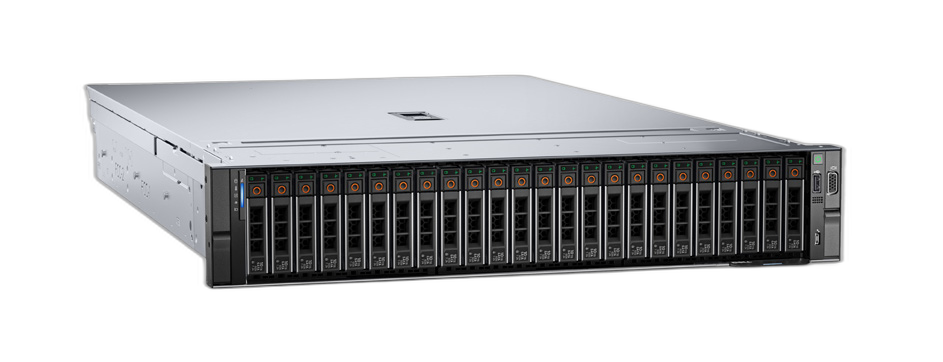
Rack servers from Dell and HPE in their current generations deliver meaningfully better performance-per-watt than gear from two refresh cycles ago. If your virtualization hosts are running on Gen 10 or older iron, the gap in compute density and memory bandwidth versus current Gen 11 and 16G platforms is not marginal — it is the difference between running 40 VMs and running 80 on the same rack footprint.
Storage Is Where Most Organizations Are Most Exposed
Storage refresh cycles are routinely delayed because the pain is invisible until it is not. A SAN array approaching end-of-support does not fail loudly — it accumulates risk quietly through degraded redundancy, unsupported drive firmware, and shrinking vendor support windows.
For Philippine enterprises, the practical framework is straightforward:
- Mission-critical transactional workloads (ERP, core banking, hyperconverged clusters) — SAN or all-flash arrays remain the right architecture. Vendors like NetApp and Pure Storage have current-generation platforms with active local support through certified partners.
- Shared unstructured data (document management, surveillance, backup repositories) — NAS appliances from Synology and QNAP offer enterprise-grade reliability at a price point accessible to mid-market organizations.
- Backup and ransomware recovery — this category now demands dedicated hardware. A backup target that doubles as primary storage is no longer an acceptable design. Immutable storage repositories should be a line item in your next capital plan.
The Network Layer Cannot Be Patched Around
Infrastructure investment that stops at compute and storage without addressing the network security layer is incomplete. Fortinet recently released FortiOS 8.0, and the APAC hardware firewall market is growing at 12.44% annually — not because vendors are manufacturing demand, but because threat surfaces are expanding faster than most enterprise defenses are being updated.
Next-generation firewalls, managed switches with proper VLAN segmentation, and out-of-band management access are not optional add-ons. They are baseline requirements for any organization that runs workloads touching Philippine personal data under the NPC's enforcement posture.
Act on a Three-Year Horizon, Not a One-Year Budget
The organizations that will be best positioned as Philippine data center capacity triples are the ones doing infrastructure planning on a three-year horizon today. That means auditing server ages and support contract expiry dates, mapping storage arrays against end-of-support schedules, and aligning network security hardware to current threat models — not the threat model from the last refresh cycle.
Reactive procurement is always more expensive than planned refresh. The market conditions ahead will reward organizations that move with intention.
Talk to our I.T. Hardware team →