Enterprise Servers for the Philippine Market: Dell, HP, and Lenovo Compared
The Philippine IT hardware market is moving. With the data center sector on track to triple capacity by 2027 and local data residency requirements tightening across financial services, healthcare, and government-adjacent workloads, the question of which server platform to standardise on has real financial and operational consequences.
Three names dominate enterprise procurement in this market: Dell Technologies, HP (now split into HP Inc. for client devices and HPE for enterprise infrastructure), and Lenovo. All three are available through certified local partners. All three offer current-generation platforms. The differences — in support structure, total cost of ownership, and fit by company size — are where the decision actually gets made.



Why Vendor Choice Matters More Than Spec Sheet
A server is not just hardware — it is a support contract, a firmware lifecycle, a spare parts chain, and a vendor relationship that will run five to seven years. Philippine IT teams often operate lean, and a server that fails without rapid local support recovery is a business continuity event, not just an IT ticket.
The right vendor is the one whose support structure, platform roadmap, and price point aligns with your operation — not the one with the highest benchmark number on paper.
Dell Technologies: The Enterprise Default
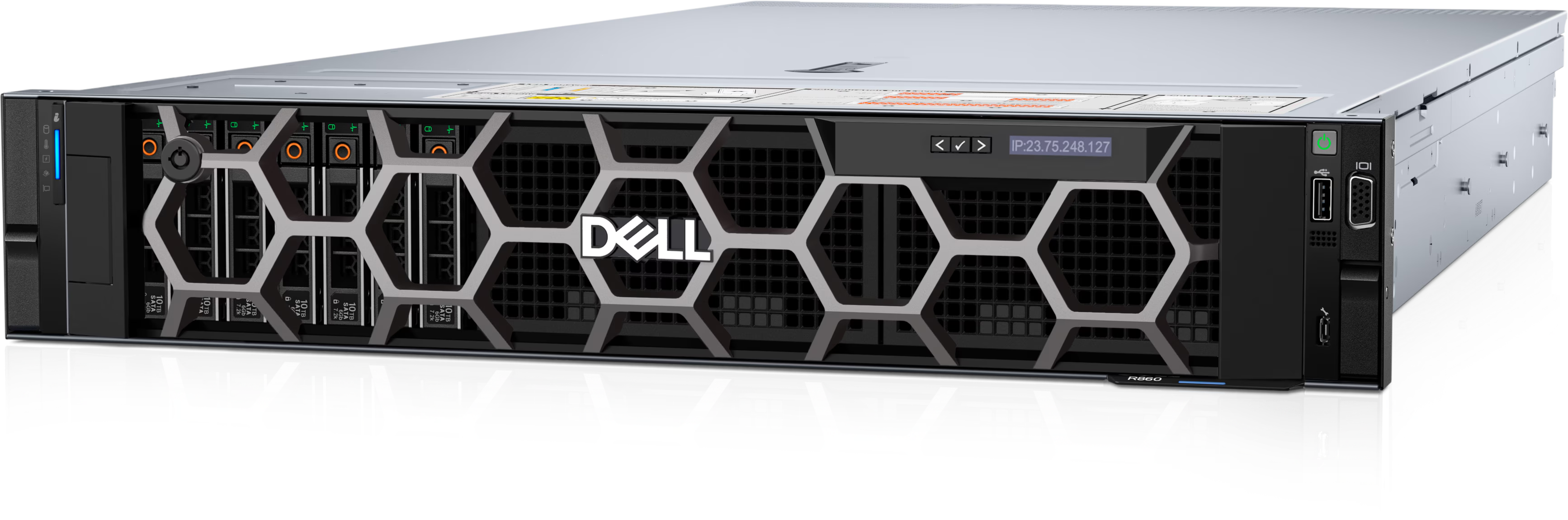
Dell's PowerEdge line is the reference point most Philippine IT managers benchmark against. The current generation — 16G PowerEdge (R650, R750, R860) — delivers significant compute density improvements over the 14G and 15G platforms that still populate many local server rooms.
What Dell does well in the Philippines:
- Local support depth. Dell's ProSupport network in the Philippines has one of the broadest local part-stocking and on-site dispatch footprints. For mission-critical workloads, next-business-day on-site response is consistently achievable in Metro Manila and major regional hubs (Cebu, Davao).
- iDRAC remote management. Dell's Integrated Dell Remote Access Controller is mature, well-documented, and integrates cleanly with VMware, Proxmox, and Windows Admin Center — the hypervisors most commonly deployed in Philippine enterprise environments.
- Direct SME accessibility. The PowerEdge T350 and T550 tower servers are priced and configured for small businesses that need on-premise compute but do not yet justify a dedicated rack room. Entry points for a configured T350 with ProSupport start within SME capital plan budgets.
Where to be careful: Dell's pricing premium over Lenovo on equivalent specs is real. For large-volume deployments — 10+ nodes — the delta compounds. Procurement teams should request competitive quotes and negotiate ProSupport terms, particularly for three-year+ contracts.
Best fit: SMEs needing their first on-premise server with strong local support; mid-market and enterprise with VMware or Windows Server environments already standardised on Dell management tooling.
HP (HPE): Engineered for Scale
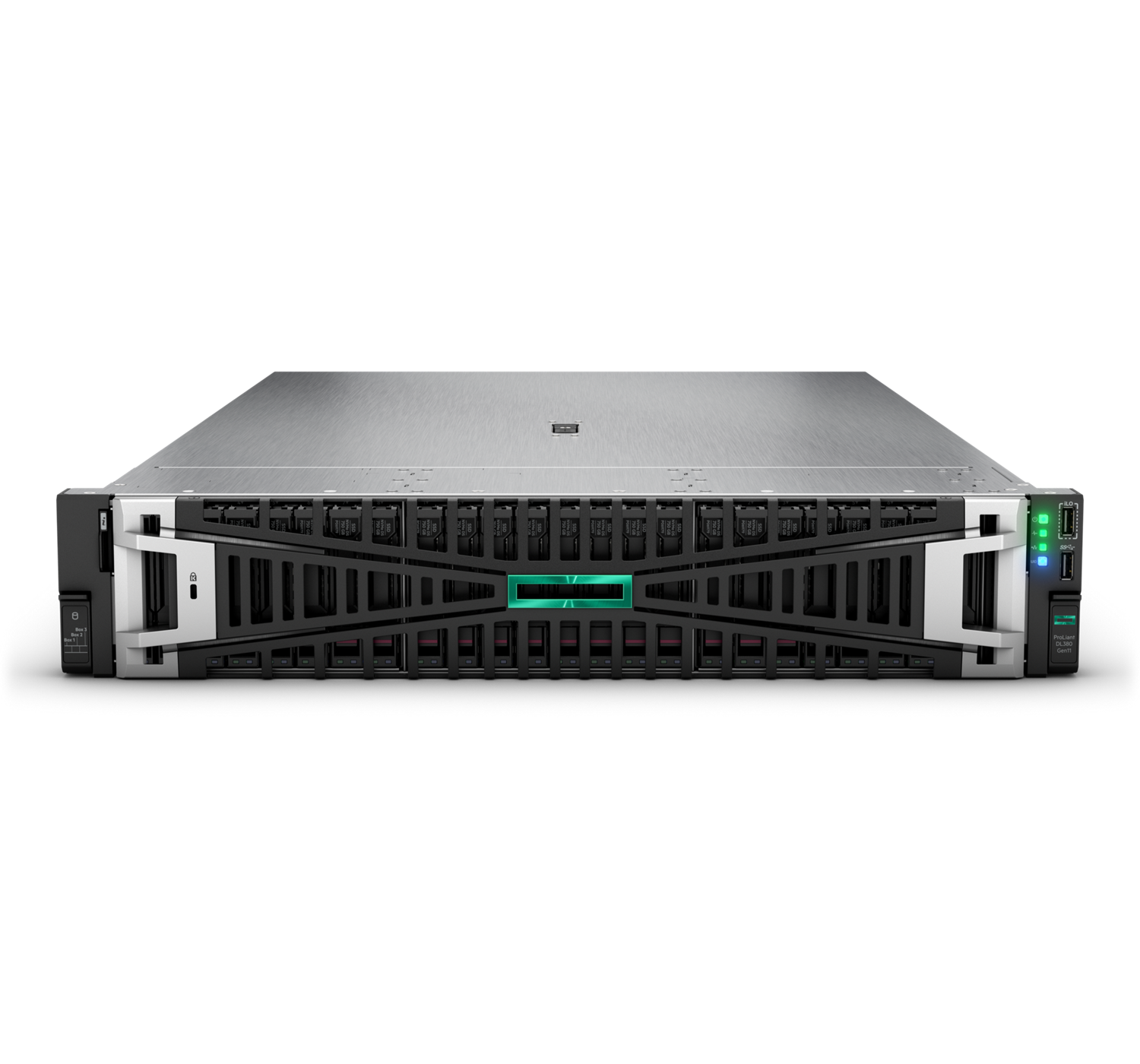
HP's enterprise server brand — HPE (Hewlett Packard Enterprise) — runs separately from HP Inc.'s consumer and SME products. In the Philippines, HPE's ProLiant Gen11 lineup (DL360, DL380, DL560) is heavily represented in banking, BPO, telco, and large government agency deployments.
What HPE does well in the Philippines:
- iLO management maturity. HPE's Integrated Lights-Out (iLO) remote management is the standard against which others are measured in heavily regulated Philippine sectors. iLO Advanced licences unlock full KVM-over-IP, power capping, and BIOS configuration — all critical for facilities where physical access is restricted.
- Blade and composable architecture. For organisations running workloads at density — virtualisation clusters, VDI, databases — HPE's Synergy composable infrastructure and blade chassis architecture reduces cable sprawl, simplifies power distribution, and supports higher compute density per rack unit than most tower-and-rack alternatives.
- Strong banking and government references. BSP-regulated institutions and DICT-aligned agencies frequently standardise on HPE. If your compliance requirements or ecosystem integrations touch government or financial sector counterparts, HPE's reference footprint reduces procurement approval friction.
Where to be careful: HPE's local support SLAs are strong in Metro Manila but thinner in provincial deployments. For Visayas or Mindanao operations, confirm part availability and dispatch times before committing at contract stage. HPE Pointnext support, while comprehensive, should be scoped carefully — add-on services can escalate TCO if not negotiated upfront.
Best fit: Mid-market to enterprise; regulated sectors (banking, healthcare, BPO); high-density virtualisation and VDI environments; organisations with existing HPE ProLiant Gen9/10 standardisation looking to refresh.
Lenovo: Best Price-Performance for Growing Teams
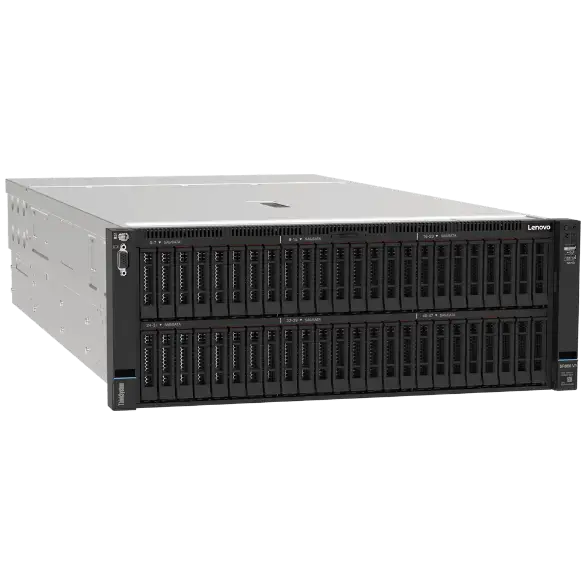
Lenovo's ThinkSystem line — SR630 V3, SR650 V3, ST650 V3 — has been gaining meaningful share in the Philippine mid-market over the last two years. The driving factor is straightforward: Lenovo consistently comes in 10–20% below Dell and HPE on equivalent specifications, with competitive support terms through local resellers.
What Lenovo does well in the Philippines:
- Price-to-performance leadership. On a peso-per-core or peso-per-GB-RAM basis, ThinkSystem V3 platforms are typically the most cost-efficient option for organisations deploying AMD EPYC or Intel Xeon workloads. For companies running Proxmox, oVirt, or open-source hypervisors, Lenovo's lower acquisition cost makes the business case easier to approve.
- XClarity management integration. Lenovo's XClarity Administrator provides centralised firmware, configuration, and inventory management across ThinkSystem nodes — comparable to iDRAC/OpenManage for Dell and iLO for HPE. Organisations deploying five or more Lenovo nodes benefit from XClarity's automation features.
- Growing local reseller network. Lenovo's certified partner footprint in the Philippines has expanded, with several IT solution providers now stocking ThinkSystem units locally. Lead times on standard configurations have improved significantly compared to two years ago.
Where to be careful: Lenovo's enterprise support brand recognition is lower among Philippine enterprise procurement committees who default to Dell or HPE. For projects requiring board or executive approval with a defined brand standard, Lenovo may require additional justification — budget savings analysis is the most effective approach. Local certified service engineer availability outside Metro Manila is also more limited than Dell.
Best fit: SME to growing mid-market; education and non-profit sectors with budget constraints; organisations comfortable with Linux/open-source hypervisors; multi-node clusters where acquisition cost savings compound meaningfully.
Head-to-Head: By Company Size
| Company Size | Recommended Platform | Rationale |
|---|---|---|
| SME (10–100 users) | Dell PowerEdge T-series or Lenovo ThinkSystem ST | Entry-level tower, local support, straightforward management |
| Growing Mid-Market (100–500 users) | Dell PowerEdge R-series or Lenovo ThinkSystem SR | Rack servers, virtualisation-ready, scalable |
| Enterprise (500+ users, regulated) | HPE ProLiant DL/Synergy or Dell PowerEdge R/MX | Density, iLO/iDRAC management depth, certified support SLAs |
| High-density / VDI clusters | HPE Synergy or Dell PowerEdge MX | Composable/blade architecture, power efficiency at scale |
| Budget-constrained growth | Lenovo ThinkSystem SR630/SR650 V3 | Lowest acquisition cost, competitive specs, improving support |
What Philippine Buyers Often Miss
Warranty localisation. Not all server warranties sold in the Philippines include on-site local support by default. Some base warranties cover return-to-base or parts-only service. Always confirm: does the warranty include next-business-day on-site parts and labour in your specific location?
End-of-support planning. A server purchased today will reach vendor end-of-support in five to seven years. Plan for that transition at procurement — negotiate extended support options now, before they are priced against urgency.
Power and UPS compatibility. Philippine commercial power (220V, 60Hz) and the frequency of outages in many industrial and provincial areas make UPS pairing non-optional for any on-premise server deployment. Technica recommends sizing UPS capacity to cover not just the server load but cooling, switching, and the time required for a controlled shutdown.
The Right Partner Matters as Much as the Brand
All three platforms — Dell, HP/HPE, and Lenovo — are well-engineered and actively supported in the Philippine market. The right choice usually comes down to support requirements, budget, existing tooling, and finding a local partner you can work with comfortably over the long term.
At Technica, we work with all three brands and do our best to help businesses find the right fit for their environment and budget. If you have questions or want to talk through your options, our team is happy to help.
For a deeper comparison of Dell vs HPE specifically — covering iDRAC vs iLO, TCO, and Philippines parts availability — see our Dell vs HPE rack server guide.
Talk to our I.T. Hardware team →