Dell, Lenovo, and HPE Are Raising Server Prices Up to 20%: What Philippine Businesses Need to Do Now
Enterprise server and PC prices have increased sharply across every major vendor. This is not a local pricing adjustment or a Philippine distribution issue — it is a global supply chain event driven by a DRAM shortage that the market has not seen at this scale before.
What Happened and When
Dell was the first to move. In mid-December 2025, Dell implemented price increases of 15–20% on servers and approximately 5% on PCs, citing rapidly rising memory component costs. Dell COO Jeff Clarke stated he had "never seen memory-chip costs rise this fast."
Lenovo followed immediately. On January 1, 2026, all Lenovo server and PC price quotations from the prior year expired. New pricing — up to 15% higher on servers — took effect. Lenovo executive Marco Andresen described the situation as "an unprecedented cost increase widely in the industry...more dramatic than usual — more than any player can mitigate." Lenovo subsequently notified partners of additional increases in March 2026, with orders received before February 28 but not shipped by March 31 subject to repricing.
HP and HPE followed the same pattern: 15% on servers, approximately 5% on PCs and laptops.
The Root Cause: AI Is Consuming DRAM Supply
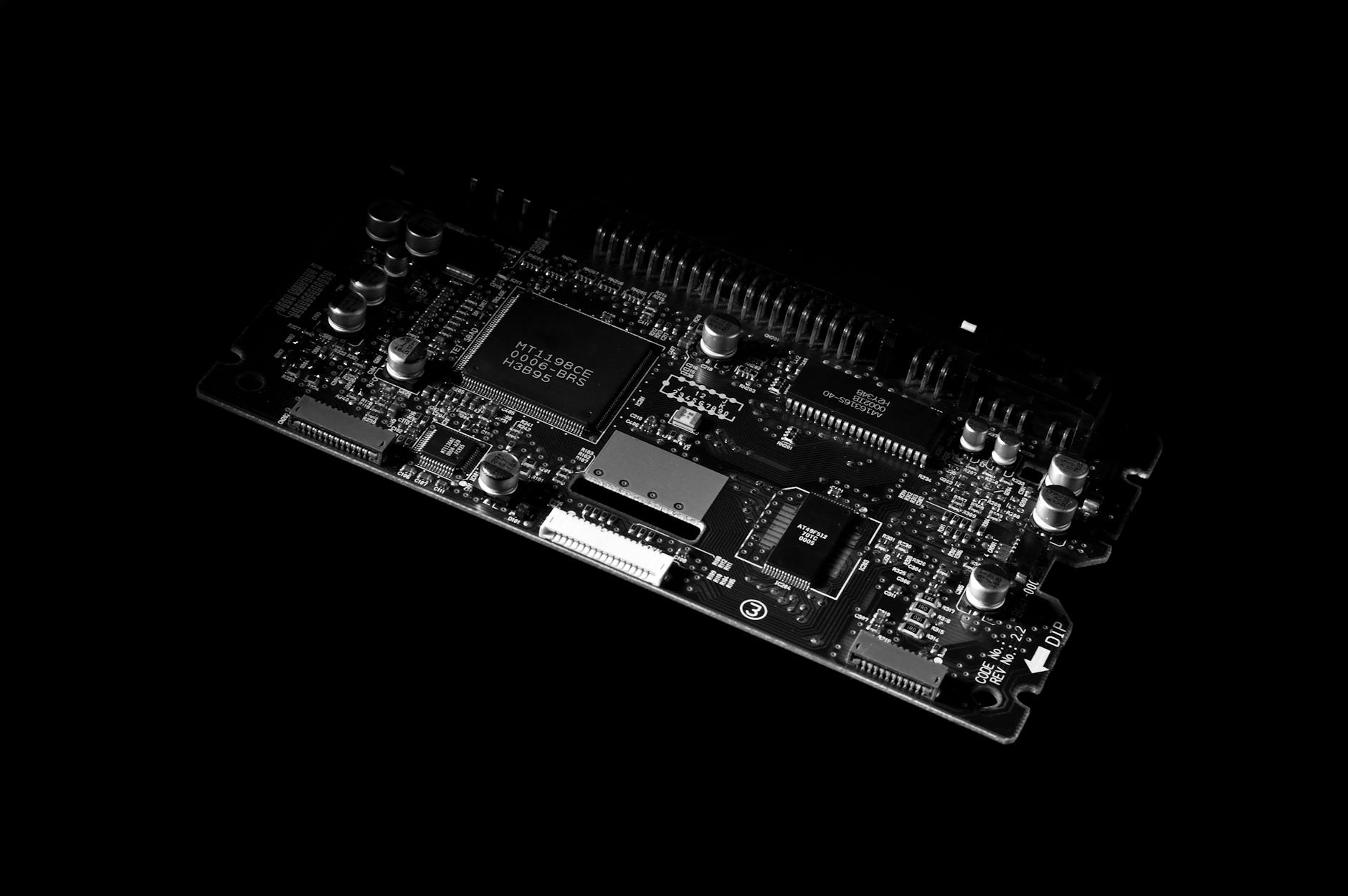
The underlying driver is straightforward. AI infrastructure — specifically the high-bandwidth memory (HBM) required in GPU clusters and AI servers — is consuming memory production capacity that previously supplied the PC and enterprise server market.
Micron, one of the three major DRAM manufacturers, discontinued its Crucial consumer brand entirely to redirect manufacturing capacity toward AI and enterprise HBM products. With Samsung and SK Hynix making similar strategic shifts, supply available to standard PC and server configurations has tightened severely.
The numbers reflect this:
- DRAM prices for standard server modules rose up to 70% over the price surge cycle
- Some DRAM components spiked as high as 170%
- TrendForce tracked PC DRAM contract prices rising 105–110% in Q1 2026 alone
- TrendForce revised its 2026 global laptop shipment forecast from +1.7% growth to a 2.6% decline as vendors pulled back on volume commitments
Memory chips represent approximately 15% of a server's total bill of materials. A 70–170% increase in that component — with no equivalent offset elsewhere — produces the 15–20% system-level price increase now visible across all major vendors.
No Relief Before 2027
Industry analysts, including those at TrendForce and IDC, do not expect meaningful DRAM price relief before 2027 at the earliest. Building new chip fabrication capacity takes years. The current shortage is structural, not cyclical — it reflects a permanent reallocation of premium memory production toward AI workloads, not a temporary supply disruption.
Dell's $64 billion in AI server orders for fiscal 2026 — with roughly $43 billion still in backlog — illustrates where memory allocation is going. AI server configurations require significantly more and higher-specification memory than standard enterprise servers. That demand is not going away.
What This Means for Philippine Businesses
If your server refresh is overdue, buying now is the rational decision.
The argument for delaying a server purchase to wait for prices to fall does not hold. Prices rose in December 2025 and January 2026 and have not retreated. Delaying a necessary refresh compounds the cost: you continue running ageing hardware with higher failure risk while the purchase price stays elevated. For a vendor-by-vendor comparison of server options in this environment, see our Dell vs HPE vs Lenovo server comparison.
Quotations expire faster than they used to.
Lenovo explicitly invalidated all standing quotes as of January 1, 2026, and repriced orders that had not yet shipped. If you are working from a quotation that is more than 30 days old, verify it is still valid before committing. This is now standard practice across all major vendors, not a Lenovo-specific policy.
The refurbished case is stronger than it was a year ago.
A certified refurbished Dell PowerEdge R740 or HPE ProLiant DL380 Gen10 — purchased from a reputable reseller with remaining warranty coverage — now represents a larger price gap versus new than it did in 2024. See our certified refurbished server guide for what to verify before buying. For standard virtualisation, file serving, and application hosting workloads, Gen10 and Gen11 refurbished platforms deliver enterprise reliability at a fraction of current new pricing. The performance difference for non-AI workloads is smaller than the price difference.
For AI-adjacent workloads, the calculus is different.
If your deployment includes GPU inferencing nodes or AI-accelerated compute, the refurbished path does not apply — those workloads require current-generation hardware. In that case, factor the current pricing environment into your 2026 budget now rather than absorbing it as a surprise mid-year.
The AI Server Roadmap Is Still On Schedule
Despite the pricing environment, Dell's PowerEdge R9822 (Vera CPU) remains on track for September 2026, and HPE's Vera Rubin NVL72 (72 Rubin GPUs, liquid-cooled) is targeted for December 2026.
For organisations evaluating AI-capable server infrastructure: if your timeline allows, waiting for the Rubin-generation hardware gives you a significant compute density jump over current Blackwell-based configurations — at pricing that will reflect the new DRAM reality regardless of timing.
Summary
| Dell servers | +15–20% effective December 2025 |
| Lenovo servers | +15% effective January 2026, further increases March 2026 |
| HP / HPE servers | +15% effective January 2026 |
| Cause | DRAM shortage driven by AI HBM demand |
| Relief timeline | Not before 2027 |
| Philippine action | Buy now for standard workloads; verify quotation validity; consider certified refurbished |
If you are specifying servers for your Philippine office or data room and need a scoped quotation at current pricing, get in touch.
Related reading: Dell vs HPE vs Lenovo Server Comparison Philippines 2026 · Certified Refurbished Servers for Philippine Businesses · NVIDIA Rubin Platform: What Philippine Server Buyers Should Know
Talk to our I.T. Hardware team →