Fiber Optic vs Cat6A: When to Use Each in Philippine Office Cabling
The choice between fiber optic and Cat6A is not a product preference — it is determined by where in the network the cable runs and what it needs to carry. Philippine IT teams that understand the structured cabling hierarchy make the right call every time; those that don't end up with fiber runs where Cat6A would have worked fine, or Cat6A backbones that bottleneck the entire building.
For the full structured cabling design context, see our structured cabling guide for Philippine offices and Cat6A patch cable and keystone guide.
The Structured Cabling Hierarchy
A correctly designed office network has three cabling segments:
Horizontal cabling (workstation/AP to IDF):
- Maximum 90 metres of permanent link
- Connects each wall outlet, AP, IP camera, and PoE device to the floor's IDF
- Standard: Cat6A UTP or STP
- Always copper — PoE requires copper
Backbone cabling (IDF to MDF, floor-to-floor, building-to-building):
- Connects distribution switches in each IDF to the core switch in the MDF
- Can be copper (Cat6A, Cat8) for short runs or fiber for longer / higher-bandwidth runs
- Standard: OS2 singlemode fiber for inter-building, OM4/OM5 multimode for intra-building
Inter-building (campus):
- Always fiber — copper cannot reliably span more than 100 metres total channel length, and building-to-building runs frequently exceed this
- Standard: OS2 singlemode, direct-burial or conduit
The practical rule: copper for the last metre to every device; fiber for everything else above 100 metres or above 10 Gbps backbone requirements.
Cat6A: The Horizontal Standard
Cat6A (Category 6A, Augmented) is the correct specification for all horizontal runs in a Philippine office deployed in 2026 or later.
Why Cat6A, not Cat6:
- Cat6A supports 10GbE at 100 metres; Cat6 supports 10GbE only at 55 metres
- Cat6A has better alien crosstalk performance, making it more reliable in dense cable bundles (common in Philippine ceiling spaces)
- Cat6A future-proofs the horizontal run for 10GbE workstations and multi-gigabit Wi-Fi 6E/7 APs that are now standard
Philippine office deployment:
- All horizontal runs: Cat6A UTP (unshielded) for standard office environments
- Near high-EMI sources (fluorescent lighting in manufacturing, motors): Cat6A STP (shielded) — requires shielded keystone jacks and patch panels throughout the channel
- Maximum channel length: 100m (90m permanent link + 10m patch cables)
PoE compatibility: Cat6A supports PoE++ (90W, IEEE 802.3bt) — required for high-power PoE devices including PTZ cameras, dual-radio Wi-Fi 7 APs, and PoE-powered desk phones with USB charging. Cat5e does not reliably support 90W PoE. See our PoE switch buyer's guide.
Fiber Optic: When and Where
Multimode vs Singlemode
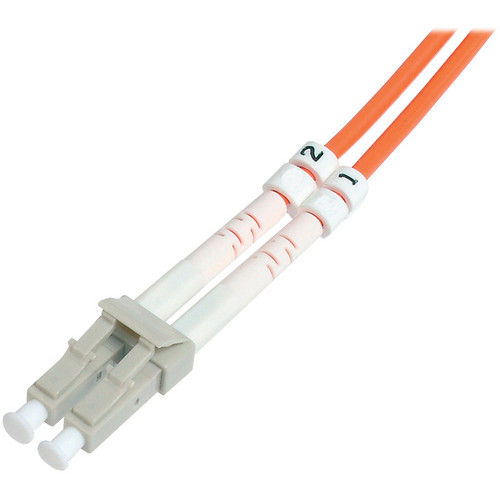
Multimode fiber (OM3, OM4, OM5):
- Orange (OM3) or aqua (OM4/OM5) jacket
- Larger core (50 micron) — less precise transceivers, lower transceiver cost
- Distance: OM4 supports 10GbE at 400m, 40GbE at 150m, 100GbE at 100m
- Best for: intra-building backbone runs (floor-to-floor within the same building)
- Philippine market transceiver cost: ₱3,000–8,000 per SFP+ 10G SR transceiver (OM3/OM4)
Singlemode fiber (OS2):
- Yellow jacket
- Smaller core (9 micron) — requires more precise (and expensive) transceivers
- Distance: supports 10GbE at 10km, 40GbE at 10km, 100GbE at 10km
- Best for: inter-building runs on a campus, runs exceeding 400m, long-haul WAN connections
- Philippine market transceiver cost: ₱8,000–25,000 per SFP+ 10G LR transceiver (OS2)
Philippine-Specific Fiber Decision Points
Multi-storey office buildings in Metro Manila:
- Floor-to-floor runs in a 10-storey building: typically 30–50 metres per floor, 300–500 metres total backbone
- OM4 multimode is correct — within distance limits, lower transceiver cost, sufficient for 10GbE backbone
- Singlemode is overkill for intra-building in this scenario
Campus or multi-building deployments:
- Philippine industrial estates, university campuses, hospitals, government compound
- Runs exceeding 400 metres between buildings: OS2 singlemode required
- Always install in conduit with pull rope for future upgrades — fiber replacement is expensive
- Direct burial fiber for inter-building runs without existing conduit
Philippine tropical environment considerations:
- Fiber is immune to EMI and humidity-induced resistance changes — a real advantage in Philippine coastal environments where copper performance degrades with humidity
- Outdoor fiber must be rated for Philippine UV exposure — use loose-tube gel-filled or armoured outdoor-rated cables, not indoor fiber in exposed outdoor runs
Cost Comparison for Philippine Deployments
Per-metre installed cost (materials + labour, Metro Manila, June 2026):
| Cable type | Materials (per metre) | Labour (per metre) | Total |
|---|---|---|---|
| Cat6A UTP | ₱35–55 | ₱40–60 | ₱75–115 |
| Cat6A STP | ₱55–80 | ₱45–65 | ₱100–145 |
| OM4 Multimode fiber | ₱45–70 | ₱60–90 | ₱105–160 |
| OS2 Singlemode fiber | ₱35–55 | ₱60–90 | ₱95–145 |
The cable cost difference between Cat6A and fiber is small. The cost difference is in the active equipment — fiber requires SFP transceivers at each end (₱3,000–25,000 per port pair), while Cat6A uses standard RJ45 ports that are included in the switch cost.
Total cost of ownership example:
- 4-port fiber backbone (IDF to MDF): ₱12,000–100,000 in transceivers + cable
- 4-port 10GbE uplink on Cat6A (if distance allows): ₱0 in additional transceiver cost (RJ45 10GbE ports on the switch)
For backbone runs under 100 metres where Cat6A is physically feasible, the RJ45 10GbE solution is cheaper and simpler. For runs over 100 metres, fiber is the only correct option regardless of cost.
Decision Guide: Which to Use
| Scenario | Correct choice |
|---|---|
| Workstation connection | Cat6A UTP |
| Wi-Fi AP connection | Cat6A UTP (PoE required) |
| IP camera connection | Cat6A UTP (PoE required) |
| Floor-to-floor backbone, under 100m | Cat6A UTP or STP (check EM environment) |
| Floor-to-floor backbone, 100–400m | OM4 multimode fiber |
| Building-to-building, under 400m | OM4 multimode fiber |
| Building-to-building, over 400m | OS2 singlemode fiber |
| Outdoor direct burial | OS2 singlemode, armoured |
Related reading: Structured cabling Philippine office · Patch cable and keystone guide · PoE switch buyer's guide · Enterprise networking refresh Philippines
For Philippine offices and campuses specifying fiber optic or Cat6A backbone cabling — design, supply, and installation — available through Technica Solutions Inc., get in touch.
Talk to our I.T. Hardware team →