Dell PowerEdge R760: The 16th-Gen Server Philippine Enterprises Are Buying in 2026
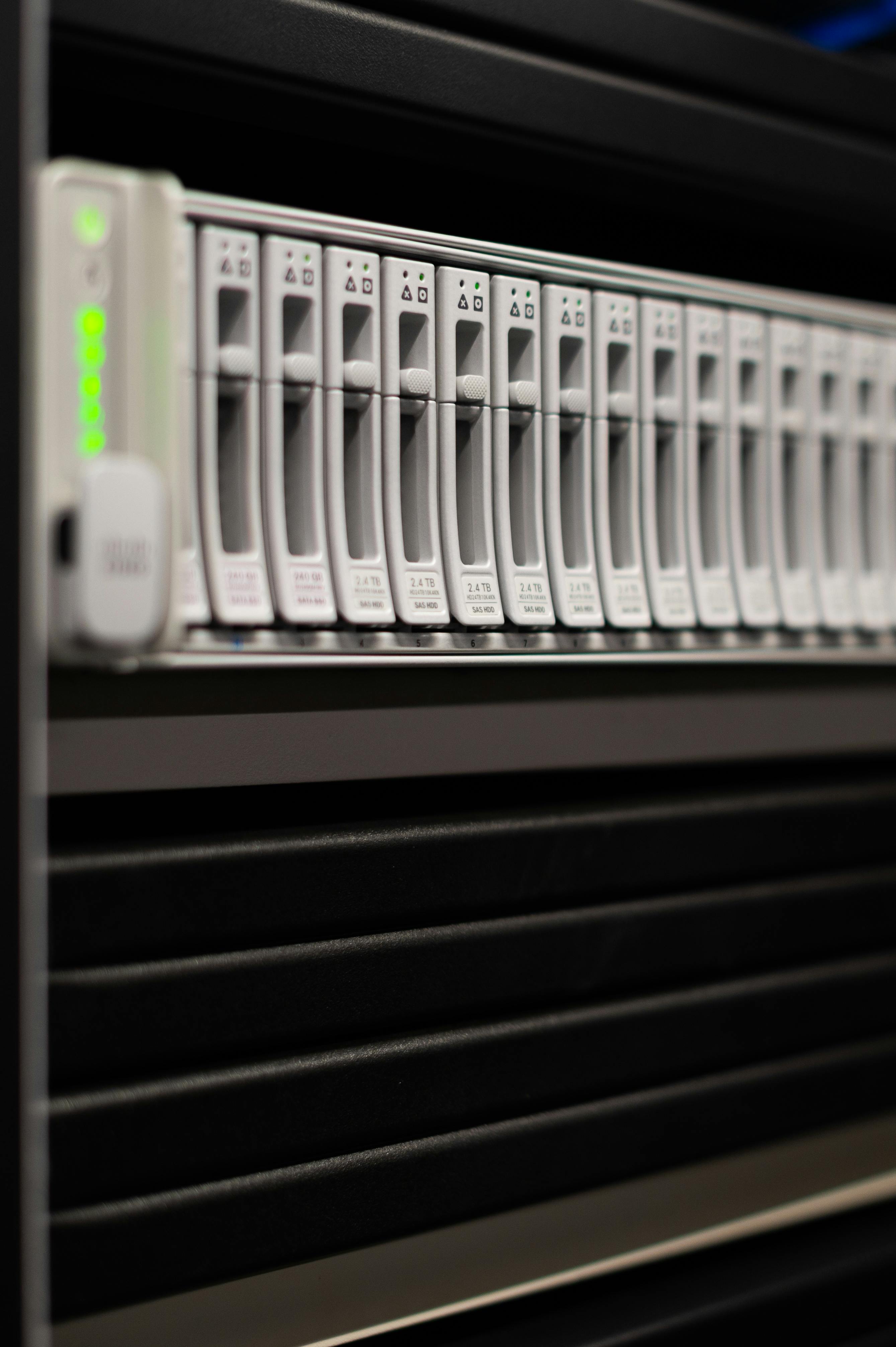
The Dell PowerEdge R760 is the flagship 2U dual-socket server from Dell's 16th-generation platform — and in 2026 it has become the standard reference point for Philippine enterprise server refresh conversations. Whether the requirement is database consolidation, VMware/Hyper-V virtualisation, VDI, or AI inference, the R760's architecture covers the spectrum.
This article covers the specifications, the key architectural decisions, what has changed from the R750, and how to think about local procurement.
What the R760 Is
The PowerEdge R760 is a 2U, two-socket rack server designed for mixed-workload production environments. Its primary value is versatility: the same platform supports high-throughput database workloads, dense VM hosting, GPU-accelerated inference, and NVMe-heavy analytics — without requiring a purpose-built appliance for each use case.
Processor Options
The R760 accommodates two processor generations:
4th Generation Intel Xeon Scalable — up to 56 cores per socket, 112 cores total, DDR5 at 4800 MT/s. This generation is available in volume and represents the mainstream R760 configuration for 2026 deployments.
5th Generation Intel Xeon Scalable — up to 64 cores per socket, 128 cores total, DDR5 at 5600 MT/s. The step up in memory bandwidth is meaningful for in-memory database workloads (SAP HANA, Oracle, Microsoft SQL Server Enterprise) and AI model inference where memory speed is the bottleneck.
One compatibility note that catches organisations mid-refresh: the R760 does not support DDR4. If you are migrating memory from an R740 or R750 estate, it does not carry over. DDR5 RDIMMs are required from day one.
Memory
The R760 supports up to 32 DDR5 RDIMM slots, with a maximum capacity of 8TB when using 256GB RDIMMs. At 5th Gen Xeon clock speeds, peak memory bandwidth reaches 5600 MT/s — a significant improvement over the 3200 MT/s ceiling of DDR4 platforms.
For Philippine enterprises running in-memory databases, ERP systems with large working sets, or consolidating multiple older servers onto fewer physical hosts, the memory ceiling is a key reason to choose the R760 over lower-tier 2U platforms.
Storage
The R760's modular backplane system supports three distinct storage configurations — operators choose at build time:
| Configuration | Drives | Best for |
|---|---|---|
| High-capacity | 12 × 3.5" SAS/SATA | NAS replacement, large dataset storage, backup targets |
| High-density | 24 × 2.5" SAS/SATA/NVMe Gen4 | Mixed workloads, virtualisation hosts |
| Ultra-fast | 16 × EDSFF E3.S NVMe Gen5 | AI training, analytics, latency-sensitive databases |
The EDSFF E3.S Gen5 configuration is the architecture-forward choice for AI inference deployments — the combination of PCIe Gen5 bandwidth, NVMe Gen5 drives, and GPU slots in a single 2U chassis is what makes the R760 competitive with purpose-built AI infrastructure for mid-scale Philippine workloads.
GPU and Accelerator Support
The R760 accommodates:
- Up to 2 × double-wide GPU cards at up to 350W each (NVIDIA H100 NVMe, A100, L40S)
- Up to 6 × single-wide accelerator cards at 75W each
This makes the R760 a practical AI inference platform for Philippine organisations that need on-premise AI workloads — whether for data sovereignty reasons, latency requirements, or regulatory restrictions on cloud processing of sensitive data.
PCIe and Connectivity
PCIe Gen5 with up to 8 PCIe slots and a dedicated OCP 3.0 slot for 25/100GbE networking. The Gen5 fabric delivers roughly double the bandwidth of the Gen4 platform in the R750 — meaningful when multiple high-speed storage devices, GPU cards, and high-bandwidth NICs compete for bus capacity.
Cooling
The Smart Flow chassis design uses directed internal airflow to maximise cooling efficiency for high-TDP configurations within standard 42U racks and standard air-cooled data rooms. For GPU-heavy or liquid-cooling-preferred deployments, optional Direct Liquid Cooling (DLC) is available for specific processor and accelerator configurations.
R760 vs. R750: When to Choose Which
| R760 (16th Gen) | R750 (15th Gen) | |
|---|---|---|
| Memory | DDR5 only, 8TB max | DDR4, 12TB max |
| PCIe | Gen5 | Gen4 |
| NVMe | Gen5 (EDSFF) available | Gen4 maximum |
| 5th Gen Xeon | Supported | Not supported |
| New deployment | Yes | Only if R750 is significantly cheaper for the workload |
| Existing R750 expansion | Not compatible | Yes |
For net-new deployments in 2026, the R760 is the correct choice. The DDR4 advantage the R750 once had — larger LRDIMM capacities at lower cost — has largely eroded as DDR5 RDIMM pricing has normalised. The R750 remains relevant for expanding existing homogeneous estates or workloads with specific DDR4 LRDIMM requirements.
Pair this with the HPE ProLiant Gen12 comparison if you are running a competitive evaluation between Dell and HPE on your next refresh cycle.
Philippine Procurement
The PowerEdge R760 is sold in the Philippines through Dell Technologies' authorised enterprise reseller channel. Base configurations in the Philippine market reflect USD list pricing (starting approximately $6,000 USD for entry configurations) converted at prevailing exchange rates, plus import duties, VAT, and reseller margin.
Technica Solutions Inc. is an authorised Dell Technologies partner in the Philippines. We provide local PHP quotations with Dell ProSupport, handle import documentation, and provide on-site deployment and configuration — including BIOS optimisation, RAID setup, OS installation, and handover documentation.
For rack server deployments in Philippine data centres and server rooms, Technica also provides structured cabling, rack integration, and KVM configuration as part of a complete server room buildout.
Key Specs Summary
| Spec | Value |
|---|---|
| Form factor | 2U rack |
| Sockets | 2 |
| Processors | 4th or 5th Gen Intel Xeon Scalable |
| Max cores | 128 (64 per socket, 5th Gen) |
| Memory | Up to 32 × DDR5 RDIMMs, 8TB max |
| Storage (max) | 24 × 2.5" NVMe Gen4 or 16 × EDSFF Gen5 |
| PCIe | Gen5, 8 slots + OCP 3.0 |
| GPU | 2 × double-wide 350W or 6 × single-wide 75W |
| Cooling | Smart Flow (air) + optional DLC |
| Management | iDRAC9 with OpenManage |
Related reading
- HPE ProLiant Gen12 vs. Gen11: What's New for Philippine Data Centres
- Rack Server vs. Tower Server: Which Is Right for Your Philippine Business
- Cisco Catalyst 9000 Upgrade Guide for Philippine Enterprises
- Laptop Refresh Cycles for Philippine SMEs: When to Upgrade