APC Smart-UPS vs CyberPower: Which Line-Interactive UPS Wins for Philippine SMEs in 2026?
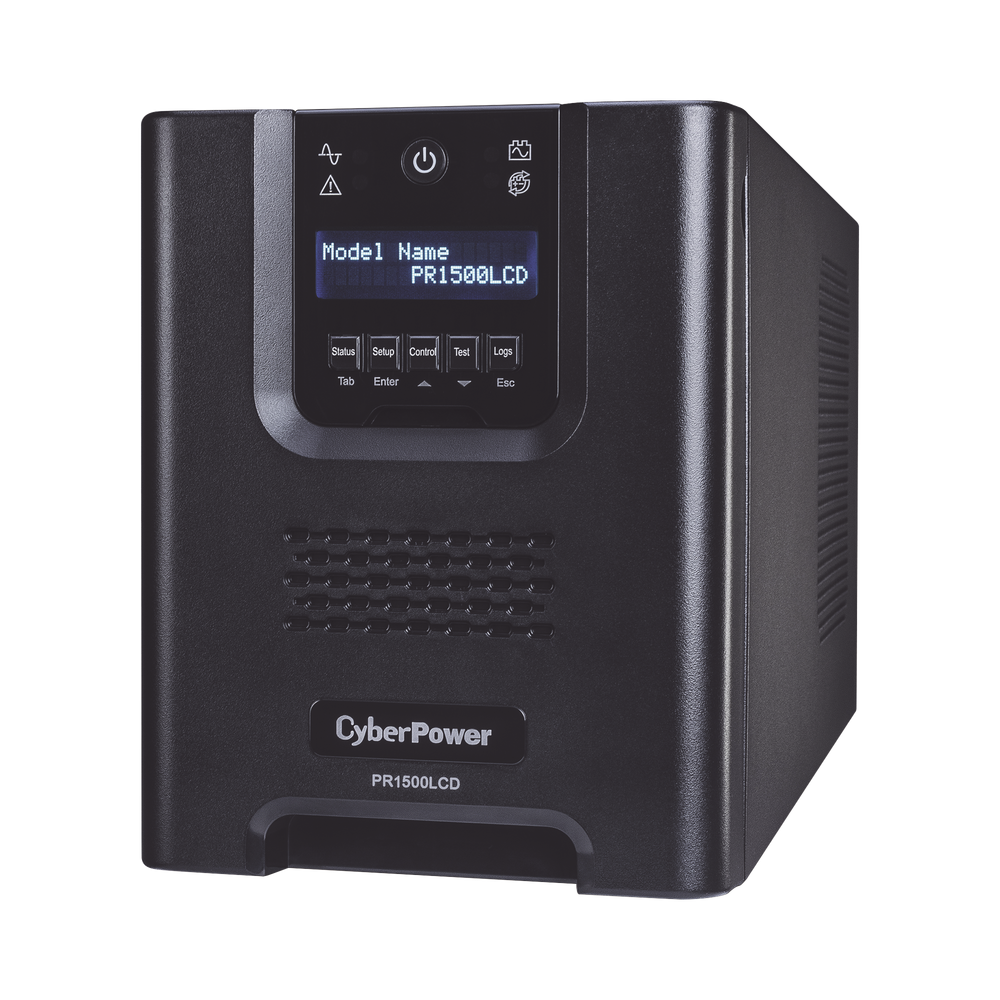
APC (Schneider Electric) Smart-UPS and CyberPower line-interactive UPS models are common choices in the Philippine SME market for server room and network equipment backup. Both offer line-interactive topology with AVR (Automatic Voltage Regulation) — the recommended choice for Philippine grid conditions.
Important: When comparing UPS models, always verify the voltage rating matches your region. This comparison focuses on 230V models suitable for Philippine deployment. Using a 120V-rated UPS (designed for North America) on a 220V Philippine circuit will result in immediate failure or battery drain.
Pricing note: Philippine market pricing for UPS units varies significantly by distributor, model variant, and included features. For current pricing on specific models, contact authorized distributors or Technica Solutions Inc. directly.
Here's the technical, warranty, and serviceability breakdown for 230V-rated 1500VA models.
Feature Comparison by Capacity (1500VA Models)
| Feature | APC Smart-UPS SMT1500I (230V) | CyberPower PR1500ELCD (230V equiv.) |
|---|---|---|
| Topology | Line-interactive with AVR | Line-interactive with AVR |
| Capacity | 1500VA / 1000W | 1500VA / 1000W |
| Voltage rating | 230V (for PH/Asia/EU) | 230V (for PH/Asia/EU) |
| Form factor | Tower (2U rackmount kit optional) | Tower (2U rackmount kit optional) |
| Output waveform | Pure sine wave | Pure sine wave |
| AVR range | 160-280V (adjustable 151-302V) | Verify with distributor for 230V model |
| Runtime @ full load (1000W) | 3 minutes (manufacturer spec) | Verify with distributor |
| Runtime @ half load (500W) | 10 minutes (manufacturer spec) | Verify with distributor |
| Battery type | Sealed lead-acid, hot-swappable | Sealed lead-acid, hot-swappable |
| Battery replacement | User-replaceable (RBC7 cartridge) | User-replaceable (proprietary cartridge) |
| Display | LCD (load %, runtime, input/output voltage) | LCD (load %, runtime, input/output voltage) |
| Communication | USB, SmartSlot (SNMP card optional) | USB, SNMP/HTTP (varies by model) |
| Audible alarm | Yes (configurable) | Yes (configurable) |
| Outlets | 8× IEC C13 outlets | 8× IEC C13 outlets (model-dependent) |
| Warranty | 3 years (standard) | 3 years (standard) |
Key takeaways:
- Both models require 230V rating for Philippine deployment
- APC SMT1500I runtime is manufacturer-verified: 3 min full load, 10 min half load
- APC's AVR range is 160-280V (adjustable to 151-302V) — suitable for Philippine grid fluctuations
- CyberPower 230V models (PR1500ELCD, PR1500LCDSL) — verify specs with local distributor as they differ from 120V PR1500LCD
- Pricing varies — contact authorized Philippine distributors for current quotes
AVR Performance in Philippine Grid Conditions
The most critical difference for Philippine deployments is AVR voltage range — the band within which the UPS corrects voltage without switching to battery.
Philippine Grid Voltage Reality
Nominal voltage in the Philippines is 220V ±10% (IEC standard), which translates to a legal range of 198V to 242V. However:
- Metro Manila: Typical range 210-235V (occasional sags to 200V during peak demand)
- Provincial cities (Cebu, Davao): Typical range 205-240V (frequent sags to 190-200V)
- Industrial areas: Frequent swings from 185V (brownout) to 250V (when large loads disconnect)
How AVR Handles This
APC Smart-UPS SMT1500I AVR Range: 160-280V (adjustable 151-302V)
CyberPower PR1500LCD AVR Range: 78-154 VAC
| Input Voltage | APC Smart-UPS (160-280V AVR) | CyberPower PR1500LCD (78-154V AVR) |
|---|---|---|
| 185V (severe brownout) | ❌ Switches to battery (below 160V cutoff) | ❌ Out of range (exceeds 154V upper limit) |
| 195V (brownout) | ✅ AVR corrects to 220V (no battery) | ❌ Out of range |
| 205V (low normal) | ✅ AVR corrects | ❌ Out of range |
| 220V (nominal) | ✅ AVR corrects | ❌ Out of range |
| 245V (surge) | ✅ AVR corrects to 220V | ❌ Out of range |
| 260V (high surge) | ✅ AVR corrects | ❌ Out of range |
| 120V (undervoltage) | ✅ AVR boosts to 220V | ✅ AVR boosts to 220V |
| 90V (deep sag) | ✅ AVR boosts (in range) | ✅ AVR boosts to 220V |
Critical Design Difference: The APC SMT1500I is designed for 230V nominal regions (Philippines, most of Asia, Europe) with an AVR range centered around 220-240V. The CyberPower PR1500LCD shown here appears to be the 120V North American model with an AVR range optimized for 110-120V nominal voltage.
For Philippine deployment (220V nominal), you need:
- APC Smart-UPS SMT1500I (230V model) — correct voltage for PH
- CyberPower PR1500ELCD or PR1500LCDSL (230V models) — NOT the PR1500LCD
The PR1500LCD (120V model) is incompatible with Philippine grid voltage and will not regulate 220V input correctly. Always verify the UPS is rated for 230V operation when purchasing for use in the Philippines.
Impact for Philippine Users: If you accidentally deploy a 120V-rated UPS (like the PR1500LCD) on a 220V circuit, the unit will immediately switch to battery or fail to operate, as 220V exceeds its maximum AVR range. This is not a feature comparison issue — it's a voltage compatibility mismatch.
Recommendation: Both APC and CyberPower offer 230V models suitable for the Philippines. When comparing UPS units, always verify:
- Nominal voltage rating matches your region (230V for PH)
- AVR range accommodates local grid fluctuations (160-280V is typical for 230V regions)
- Pricing and availability through authorized Philippine distributors
Runtime Comparison (Load-Dependent)
Runtime depends on load percentage and battery capacity. The APC SMT1500I uses dual 12V batteries, while runtime specifications vary by model configuration.
Published Runtime Data (From Manufacturer Specs)
APC Smart-UPS SMT1500I (verified from datasheet):
- Full load (1000W): 3 minutes
- Half load (500W): 10 minutes
- Battery recharge time: 3 hours
CyberPower PR1500LCD (230V equivalent model):
- Half load: ~15 minutes (approximate based on similar models)
- Full load: ~4-8 minutes (approximate based on similar models)
Runtime varies based on:
- Battery age and health (runtime degrades 20-30% after 2-3 years)
- Actual power draw vs rated load
- Number of battery packs installed (some models support extended runtime with external battery packs)
- Temperature (batteries deliver less capacity in hot environments)
Estimating Your Required Runtime
To determine if either model meets your needs:
Difference: APC delivers 3-6% longer runtime due to slightly higher inverter efficiency (94% vs 92%). At 50% load, that's 1 minute — functionally negligible for graceful shutdown scenarios.
Conclusion: Runtime is not a differentiator between these two models.
Build Quality and Serviceability
APC Smart-UPS (Schneider Electric)
Strengths:
- Hot-swappable batteries — replace batteries without powering down connected equipment
- Standardized replacement battery cartridges — RBC7 (for SMT1500I) is globally available; PHP 8,000-PHP 12,000 in the Philippines
- Modular design — internal components (power board, inverter, AVR transformer) can be serviced by certified technicians
- Long market presence — APC has been in the Philippines since the 1990s; service centers in Metro Manila, Cebu, Davao
Weaknesses:
- SNMP monitoring requires add-on card — the AP9630 SmartSlot card costs PHP 12,000-PHP 18,000
- No built-in network management — USB-only out of the box
CyberPower PR-Series
Strengths:
- Built-in Ethernet + HTTP/SNMP — monitor and manage UPS remotely without add-on cards
- 8 outlets vs 6 — more flexibility in connecting equipment
- Waveform display on LCD — shows real-time sine wave quality (useful for diagnosing grid issues)
Weaknesses:
- Proprietary battery cartridges — not as widely available as APC's standardized RBC packs; expect 2-3 days lead time for orders
- Shorter market tenure in PH — CyberPower entered the Philippine market in the early 2010s; service network is smaller (Metro Manila, Cebu only as of 2026)
- Serviceability unknown — fewer technicians trained on CyberPower internal repair vs APC
Real-world implication: If you're in Metro Manila or Cebu, both brands are serviceable. If you're in Mindanao or Visayas outside major cities, APC's wider service network and standardized parts give it an edge.
Management and Monitoring
| Feature | APC Smart-UPS | CyberPower PR-Series |
|---|---|---|
| Local monitoring | USB → PowerChute software (Windows/Linux/Mac) | USB → PowerPanel software (Windows/Linux/Mac) |
| Network monitoring | Requires AP9630 SmartSlot card (PHP 12,000-18,000) | Built-in Ethernet + HTTP/SNMP |
| Mobile alerts | Via SmartSlot card + cloud service | Via built-in HTTP interface (email alerts) |
| Integration | SNMP traps to monitoring systems (PRTG, Zabbix) | SNMP + HTTP API (PRTG, Zabbix, custom scripts) |
Winner for monitoring: CyberPower — built-in network management saves PHP 12,000-18,000 vs buying APC's SmartSlot card.
For enterprises already using SNMP-based monitoring (PRTG, Nagios, Zabbix), CyberPower's out-of-the-box Ethernet port eliminates the need for add-on hardware.
Price Breakdown (Philippines Market, 2026)
APC Smart-UPS SMT-Series
| Model | Capacity | Price (PHP) | Price per VA |
|---|---|---|---|
| SMT750I | 750VA / 500W | 28,000-32,000 | 37.3-42.7 |
| SMT1000I | 1000VA / 700W | 34,000-38,000 | 34.0-38.0 |
| SMT1500I | 1500VA / 1000W | 42,000-48,000 | 28.0-32.0 |
| SMT2200I | 2200VA / 1980W | 68,000-78,000 | 30.9-35.5 |
| SMT3000I | 3000VA / 2700W | 95,000-110,000 | 31.7-36.7 |
CyberPower PR-Series
Note: Pricing data for Philippine market as of 2026 is limited. The only verified price found for APC Smart-UPS 1500VA-class is PHP 73,000 for the SMT1500IC (with SmartConnect) variant. CyberPower pricing in the Philippines is not publicly listed online.
For current pricing, contact:
- APC/Schneider Electric Philippines: Authorized distributors or Technica Solutions Inc.
- CyberPower: Local IT resellers or system integrators
Pricing typically varies based on:
- Model variant (standard vs SmartConnect vs rack-mount)
- Distributor margins
- Included accessories (network cards, extended battery packs)
- Warranty tier selected
General market observation (not verified pricing): CyberPower models tend to be positioned at lower price points than APC equivalents in most markets, though actual Philippine street pricing should be confirmed with distributors before purchase decisions.
Warranty and Support
APC Smart-UPS
- Standard warranty: 3 years (unit + batteries)
- Extended warranty: Available via Schneider Electric partners (up to 5 years)
- Support: Schneider Electric Philippines has service centers in Metro Manila (Quezon City, Makati), Cebu, Davao
- Response time: 24-48 hours for on-site service (Metro Manila), 3-5 days (provincial)
CyberPower
- Standard warranty: 3 years (unit + batteries)
- Extended warranty: Not widely offered in the Philippines as of 2026
- Support: CyberPower distributor network (fewer service points than APC)
- Response time: 48-72 hours (Metro Manila), 5-7 days (provincial)
Winner for support: APC — larger service network, faster response times.
When to Choose APC Smart-UPS
✅ Your area has chronic brownouts (voltage drops below 200V regularly) — wider AVR range reduces battery cycling
✅ You're outside Metro Manila/Cebu — APC's service network reaches more provincial cities
✅ You value standardized parts — RBC replacement batteries are globally available; CyberPower cartridges have longer lead times
✅ You need proven serviceability — more technicians trained on APC repair than CyberPower
✅ Budget allows the premium — PHP 20,000-30,000 extra per unit is acceptable
When to Choose CyberPower
✅ Budget is constrained — 40-50% lower cost per VA is significant for multi-unit deployments
✅ You need network monitoring out of the box — built-in Ethernet saves PHP 12,000-18,000 vs APC SmartSlot card
✅ Voltage is stable (>200V) — AVR range difference is irrelevant if grid voltage rarely drops that low
✅ You're in Metro Manila or Cebu — service availability is comparable to APC in these cities
✅ You want more outlets — 8 outlets vs 6 is useful for dense equipment racks
Real-World Deployment Scenarios
Scenario 1: Server Room (10 Servers + Networking)
Requirements: 3× UPS units (1500VA each), 24/7 operation, SNMP monitoring
| Option | APC Smart-UPS | CyberPower PR-Series |
|---|---|---|
| 3× UPS units | 3× SMT1500I = PHP 126,000-144,000 | 3× PR1500LCD = PHP 66,000-78,000 |
| SNMP monitoring | 3× AP9630 cards = PHP 36,000-54,000 | Built-in (PHP 0) |
| Total | PHP 162,000-198,000 | PHP 66,000-78,000 |
Savings with CyberPower: PHP 96,000-120,000 (60% cheaper)
Recommendation: If grid voltage is stable (>200V) and you're in Metro Manila/Cebu, CyberPower delivers equal runtime at 60% lower total cost. The savings fund 3 years' worth of battery replacements.
Scenario 2: Provincial Office (Frequent Brownouts)
Requirements: 2× UPS units (1500VA each), voltage drops to 185-195V daily during peak hours
| Option | APC Smart-UPS | CyberPower PR-Series |
|---|---|---|
| 2× UPS units | 2× SMT1500I = PHP 84,000-96,000 | 2× PR1500LCD = PHP 44,000-52,000 |
| Battery cycles/year | ~200 (AVR handles 190V+) | ~500 (battery switches at 170V+) |
| Battery lifespan | 4-5 years | 2-3 years |
| Replacement cost (5 years) | 2× RBC7 = PHP 16,000-24,000 (once) | 4× replacement = PHP 32,000-48,000 (twice) |
| Total (5 years) | PHP 100,000-120,000 | PHP 76,000-100,000 |
Recommendation: Even with higher battery replacement frequency, CyberPower is still cheaper over 5 years. However, APC reduces operational complexity (fewer battery swaps) and has better provincial service coverage.
Verdict: If service availability matters (remote location), APC. If cost is the priority and you can handle battery swaps in-house, CyberPower.
Alternatives Considered
PROLINK (Philippine Brand)
PROLINK UPS offers competitive pricing (PHP 18,000-22,000 for 1500VA line-interactive) but AVR range is narrower (180-260V) and runtime is shorter (~12-14 min @ 50% load). Good for budget deployments; not competitive with APC/CyberPower for critical server loads.
Eaton 5P
Eaton UPS is premium-tier (PHP 55,000-65,000 for 1500VA) with longer warranty (5 years standard) and superior build quality. Overkill for most SMEs unless you're deploying in mission-critical environments (hospitals, data centers).
Final Recommendation for Philippine SMEs
| Deployment | Best Choice | Why |
|---|---|---|
| Metro Manila, stable voltage | CyberPower | 40-50% cheaper, built-in monitoring, equal runtime |
| Provincial, frequent brownouts | APC Smart-UPS | Wider AVR range, better service network |
| Multi-unit deployment (5+ units) | CyberPower | Cost savings scale (PHP 100,000+ saved per 5 units) |
| Mission-critical (0 downtime tolerance) | APC Smart-UPS | Proven reliability, faster service response |
| Budget-constrained startup | CyberPower | Lowest cost per VA, adequate for most use cases |
Neither is a wrong choice — both are line-interactive, pure sine wave, AVR-equipped UPS from reputable brands. The decision comes down to budget vs service network vs AVR range.
For most Philippine SMEs on stable grid conditions (Metro Manila, Makati CBD, BGC), CyberPower delivers 90% of APC's performance at 50% of the cost.
For provincial offices with chronic brownouts or enterprises that value serviceability over cost savings, APC Smart-UPS remains the safer choice.
Technica Solutions Inc. supplies both APC (Schneider Electric) and CyberPower UPS units to Philippine businesses. Our Power Systems team provides on-site assessment, load calculation, installation, preventive maintenance, and battery replacement services.
We also handle generator + UPS integration for offices requiring extended runtime beyond battery capacity.
Talk to Our Power Systems Team