Dell vs HPE Rack Servers: Philippine Enterprise Buyer's Guide 2026
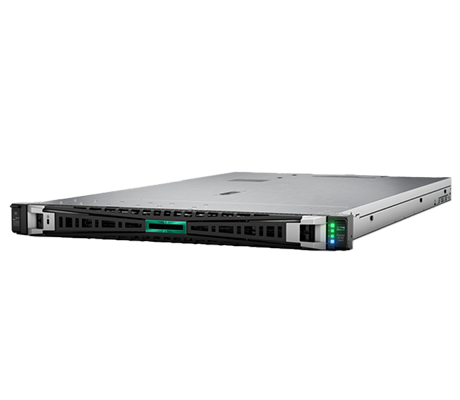
If you are sizing a server refresh for a Philippine enterprise — whether for a primary data center, a branch office rack, or a virtualization cluster — the decision almost always comes down to two vendors: Dell and HPE. Both are available through authorized local channels. Both offer current-generation hardware with enterprise support. And both have a strong installed base in the Philippines.
The question is which fits your environment, your team's skills, and your budget cycle.
What Each Vendor Is Selling in 2026
Dell PowerEdge is now in its 16th generation. The current lineup — R650, R750, R760, R860 — covers everything from 1U density-optimized compute to 4U scale-up workloads. Dell's recent focus has been on AMD EPYC processor integration alongside Intel Xeon Scalable, giving buyers genuine flexibility on core density versus per-socket performance.
HPE ProLiant Gen11 launched across DL360, DL380, and DL560 platforms. HPE's engineering emphasis in Gen11 is on security — the silicon root of trust, firmware resilience, and supply chain transparency features are built into the hardware layer, not managed as software overlays. For organizations in BFSI, healthcare, or government, this is a meaningful differentiator.
Both platforms support NVMe storage, PCIe Gen5, and the latest memory standards. Both support direct liquid cooling for high-density AI and GPU workloads. At the hardware specification level, the gap between them is narrow.

Remote Management: iDRAC vs iLO
This is where most IT teams have a strong existing preference — and it matters more than the processor choice for day-to-day operations.
Dell iDRAC9 (integrated Dell Remote Access Controller) is a mature, well-documented platform. The web interface is clean, the API is well-supported, and Ansible/Terraform integrations are widely available. For teams running hybrid infrastructure with automation pipelines, iDRAC integrates predictably into existing toolchains.
HPE iLO6 (Integrated Lights-Out) has been the benchmark for server management for two decades. The current generation adds firmware attestation, hardware-level anomaly detection, and a more granular event log than iDRAC. For lean IT teams that rely on iLO to manage remote sites — which describes most Philippine enterprises with provincial offices — iLO's reliability track record is hard to argue with.
If your team already has strong iLO or iDRAC expertise, stay on that platform. Switching out of familiarity does not justify the retraining cost.
Philippines Availability and Support
Both Dell and HPE have authorized channel partners and service coverage in the Philippines. Key differences to note:
Parts availability. For Metro Manila deployments, next-business-day parts replacement is achievable through both vendors. For provincial sites in Cebu, Davao, Clark, or Iloilo, lead times vary. HPE's parts logistics for provincial sites have historically been more consistent; Dell has been closing this gap. If you have branch offices outside Metro Manila, verify parts SLAs explicitly before committing.
ProDeploy vs HPE PointNext. Both vendors offer deployment, configuration, and migration services. Dell's ProDeploy is well-structured for standardized workloads. HPE PointNext tends to offer more flexibility for custom configurations. For complex VMware or Microsoft environments, HPE PointNext engagements often include pre-validated reference architectures that accelerate deployment.
Resale and end-of-life. Dell PowerEdge hardware retains secondary market value reasonably well in the Philippines. HPE ProLiant has a deeper secondary market globally, which affects trade-in valuations for refresh cycles.
Total Cost of Ownership
At equivalent specifications, Dell PowerEdge and HPE ProLiant Gen11 are priced similarly in the Philippine market. The TCO difference shows up in three places:
-
Licensing model for management software. HPE iLO Advanced licensing adds cost for full iLO feature access. Dell's iDRAC Enterprise is included with ProSupport. Factor this into multi-year TCO calculations.
-
Support contract terms. Both offer 3-year and 5-year support contracts. Compare ProSupport Plus (Dell) against HPE Foundation Care carefully — response time tiers and coverage definitions differ in ways that matter for critical workloads.
-
Expansion flexibility. Dell's broader storage portfolio (PowerVault, PowerStore) integrates cleanly with PowerEdge for unified support. HPE's Alletra and Primera storage lines are technically strong but may require separate support tracks if your team manages storage separately from compute.
The Decision Framework
Choose Dell PowerEdge if:
- Your team already runs iDRAC in your environment
- You are standardizing on a Dell ecosystem (networking, storage, servers)
- You are deploying AMD EPYC workloads and want the broadest configuration flexibility
Choose HPE ProLiant if:
- Your compliance or security posture requires hardware-level firmware attestation
- You have provincial sites where iLO's remote management reliability matters
- You are deploying into a VMware or Red Hat reference architecture (HPE has validated more pre-built configurations here)
For Philippine enterprises refreshing aging hardware — including EOL platforms like the ProLiant DL380 Gen9 or PowerEdge R730 — either current-generation platform represents a meaningful performance and security improvement. The right answer is the one your team can operate confidently, not the one with the better spec sheet.
For a broader comparison that includes Lenovo and guidance on which platform fits different company sizes, see our Enterprise Servers for the Philippine Market guide.
Talk to our I.T. Hardware team →