Azure AI Foundry in May 2026: What's Now Available for Enterprise AI Agents
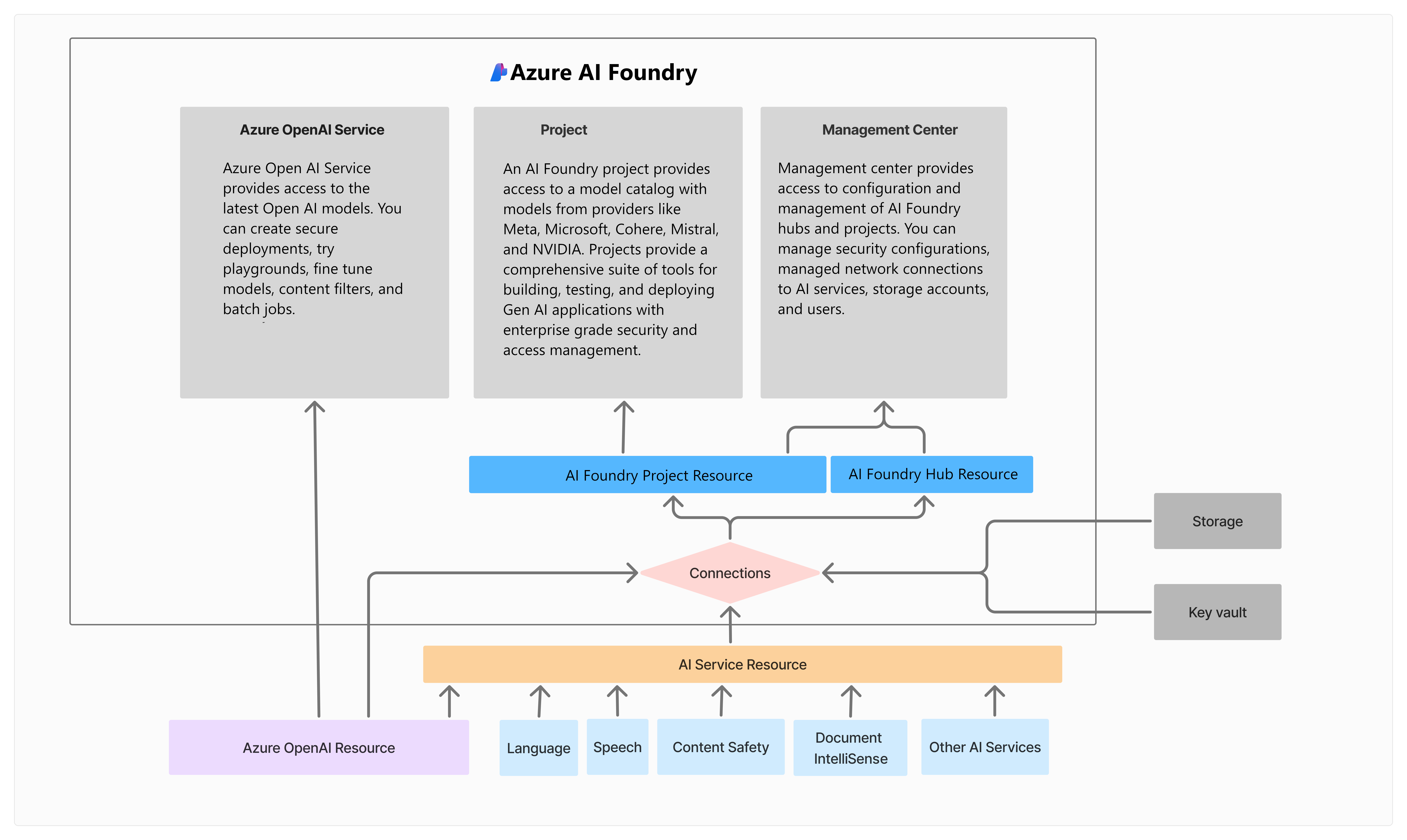
Microsoft Foundry has been shipping significant updates every month in 2026. Most organisations on Azure are aware of Foundry as a platform but are not tracking what has actually landed versus what is still in preview. This is a current-state summary of what is available now, as of May 2026 — not what is coming at Build.
Frontier Models Now GA in Foundry
Three major model releases have reached general availability in Microsoft Foundry since the start of 2026:
GPT-5.5 is now GA in Microsoft Foundry. It advances long-context reasoning, improves agentic execution reliability, increases computer-use accuracy, and delivers better token efficiency for sustained, high-stakes professional workflows. Quota is available at Tier 5/6 — enterprise agreements on Azure can request allocation through the Azure portal.
GPT-5.2 is also GA in Foundry. Built for multi-step problem solving, long-context understanding, and agentic tool-calling, it achieves top benchmark scores across mathematics, science, coding, and multimodal tasks. For organisations that do not need GPT-5.5's frontier capability at the corresponding cost, GPT-5.2 is the workload-optimised default.
GPT-5.1 Codex Max is GA with a 400K context window, support for 50+ programming languages, and 77.9% on SWE-Bench. It is designed for autonomous multi-agent coding pipelines, PR generation, and CI/CD integration — not conversational assistants. For engineering teams running code review automation or test generation pipelines on Azure, this is the relevant model.
Microsoft Agent Framework — AutoGen and Semantic Kernel Unified
The Microsoft Agent Framework is now in public preview. It is the most significant architectural update to Foundry since launch.
Previously, Microsoft maintained two separate open-source agent frameworks: AutoGen (for research-grade multi-agent orchestration) and Semantic Kernel (for production-grade enterprise agent development). They converged on different API surfaces, required different skills to operate, and created a fragmented ecosystem.
The Agent Framework merges both into a single commercial-grade SDK. It provides:
- Coordinated orchestration of multiple agents across long-running tasks with persistent state
- Built-in error handling, retries, and recovery — agents can fail and resume without restarting the workflow
- Unified observability across agents built with Agent Framework, LangChain, LangGraph, and the OpenAI Agents SDK
- Agent-to-Agent (A2A) tool support — Foundry agents can call any A2A-protocol endpoint with explicit auth
For Philippine development teams building internal tools on Azure: the Agent Framework is the clearest path from a Foundry prototype to a production multi-agent system. The convergence of AutoGen and Semantic Kernel into one SDK means the skills your team builds transfer directly to production deployment.
Foundry MCP Server — Cloud-Hosted at mcp.ai.azure.com
The Foundry MCP Server is now in preview. It is a cloud-hosted Model Context Protocol (MCP) server that can be connected from VS Code, Visual Studio, or the Foundry portal — without running any local process.
MCP is the open protocol that lets AI agents communicate with external tools and data sources in a standardised way. By hosting an MCP server in the Azure cloud, Microsoft removes the requirement to manage a local MCP process for every developer or agent workflow. Authentication is handled by Entra ID — no separate credential management required.
For organisations connecting business systems (ERP, CRM, HRIS, accounting) to AI agents: Foundry's Tools tab already lists over 1,400 connected business systems via MCP, A2A endpoints, Azure AI Search, SharePoint, and Fabric. The cloud-hosted MCP server means those integrations are accessible from any connected agent without local setup.
Persistent Agent Memory — No More Stateless Agents
Memory in Foundry Agent Service is now in public preview. It addresses one of the most significant practical limitations of enterprise AI agents: every conversation started from scratch.
Memory provides a fully managed, long-term memory store natively integrated with the Foundry Agent Service runtime. It automatically extracts, consolidates, and retrieves user preferences and context across sessions — without requiring your team to build a custom embedding database, manage retrieval logic, or architect session state.
For Philippine business applications: an internal HR helpdesk agent that remembered each employee's prior questions, a finance automation agent that retained the last quarter's reporting preferences, or a customer onboarding agent that carried context from the first touchpoint through contract signature — these are the use cases Memory is designed for.
Foundry Labs: May 2026 Releases
Microsoft Research AI Frontiers shipped four new releases through Foundry Labs in May 2026:
SocialReasoning-Bench — an open-source benchmark measuring how well an agent advocates for the person it represents in multi-agent interactions. Relevant for organisations building agents that negotiate, recommend, or represent business interests in automated workflows.
MAI-Image-2-Efficient — Microsoft's latest text-to-image model, up to 22% faster and 4× more efficient than its predecessor MAI-Image-2, outpacing leading text-to-image models by 40% on average. For marketing and product teams generating visual assets at scale on Azure.
Experimental end-to-end agentic stack — a reference architecture for agents that spans model selection, tool orchestration, memory, and observability as a single deployable unit.
What This Means for Philippine Azure Users
If you are on Azure but not yet using Foundry: the May 2026 state of the platform is materially different from what existed six months ago. For a broader look at the Foundry roadmap, see our Microsoft Build 2026 preview. GPT-5.5 at GA, unified agent SDK, cloud-hosted MCP, and persistent memory — these are production-ready capabilities, not previews. The window between pilot and production deployment has shortened significantly.
If you are running agents in production today: upgrade your Foundry Agent Service to pick up the Memory integration. The shift from stateless to stateful agents changes the economics of agent deployment — fewer re-prompting cycles, better task completion rates, and lower per-session cost.
If you are evaluating Azure vs other cloud platforms for AI workloads: Microsoft's $190B capex commitment in 2026, discussed further in our Microsoft SEA cloud investment overview,, the doubling of AI infrastructure capacity, and the depth of the Foundry toolchain make the Azure AI argument primarily an integration and governance argument, not a model capability argument. If your business already runs on M365, SharePoint, and Teams, Foundry's integrations with those systems are natively tighter than any alternative.
Microsoft Build 2026 runs June 2–3 and will formalise GA dates for several current previews. If you want to evaluate Foundry for a specific workload before the keynote, access is open now on Azure.
Related reading: Microsoft Build 2026: Azure AI Foundry Preview · Microsoft Copilot vs Google Gemini for Philippine Businesses · Microsoft's Southeast Asia Cloud Investment
Talk to our Cloud & I.T. team →