Server Room Grounding and Earthing for Philippine Data Rooms: Why It Fails and How to Fix It
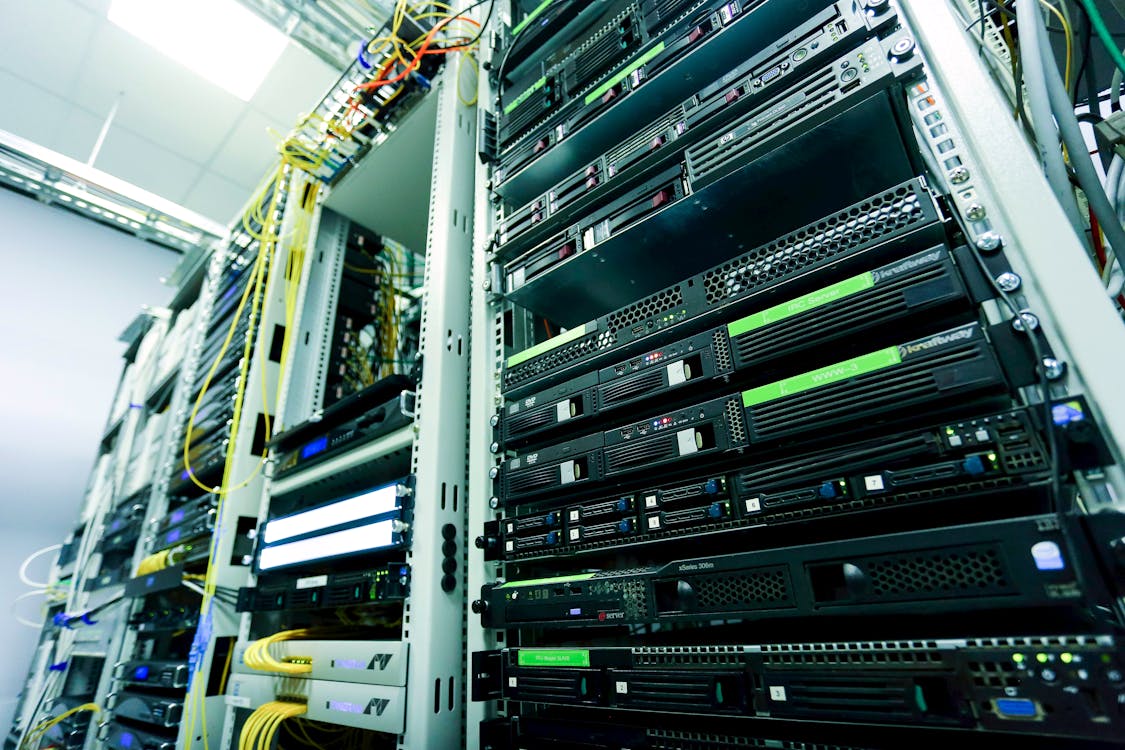
Ground resistance above 5 ohms in a Philippine server room causes problems that are difficult to diagnose because the symptoms are intermittent and appear unrelated to power: random kernel panics, network interface errors, unexplained storage I/O failures, and accelerated hardware failure rates. The link between these symptoms and poor grounding is not obvious unless you know to measure it.
This is the grounding and earthing guide for Philippine IT teams responsible for server rooms — what is required, how to test it, and what to do when the building does not provide adequate grounding.
Why Grounding Matters for IT Equipment
The Ground Reference Problem
Electronic equipment — servers, switches, storage, UPS — uses the ground conductor as a reference voltage for all signal circuits. When ground is not a stable zero-voltage reference (because it has resistance, is shared with noise sources, or is floating), signal voltages are undefined relative to ground. The results:
- Ethernet errors: The PHY chip uses ground as a signal reference. Ground noise above approximately 50mV causes CRC errors, retransmissions, and dropped connections that appear as network instability.
- Storage errors: SATA and SAS interfaces are similarly ground-referenced. Ground noise causes bit errors that appear as storage I/O errors or filesystem corruption.
- Server crashes: The server's power supply uses ground as a reference for its output voltage regulation. Unstable ground causes output voltage fluctuations that trigger protection circuits and result in unexpected shutdowns.
The Philippine Grid Context
Philippine electrical grounding quality varies significantly:
Well-grounded commercial buildings (Metro Manila): Purpose-built data centres and modern commercial buildings with proper earthing electrode systems typically measure 1–3 ohms — within the 5-ohm standard.
Older commercial buildings: Ground conductors may be connected to the water pipe system (no longer acceptable under PEC), share the ground with HVAC and industrial equipment (causing ground noise), or have never been tested since installation.
Provincial commercial buildings: Ground resistance above 25 ohms is common in areas with dry, sandy, or rocky soil — high-resistivity conditions that make achieving low ground resistance without proper electrodes difficult.
Philippine Standards for Grounding
The Philippine Electrical Code (PEC) 2017 specifies:
- Maximum grounding electrode system resistance: 25 ohms for residential (this is a minimum standard, not a target)
- For data centres and sensitive electronic equipment: 5 ohms or below is the industry standard (IEC 62305, ANSI/TIA-942)
- Isolated ground (IG) systems for sensitive IT equipment: required to eliminate conducted noise from shared ground paths
The gap: A building that passes PEC inspection (under 25 ohms) may still have ground resistance of 10–20 ohms — which causes problems for IT equipment. The PEC standard is a safety standard, not an IT equipment performance standard.
How to Test Ground Resistance
Fall-of-Potential Method (3-Point Test)
The standard measurement method for ground electrode resistance. Requires a digital earth resistance tester (Fluke 1621, AEMC 6416, or equivalent) — not a standard multimeter.
Procedure:
- Disconnect the grounding electrode from the electrical system (to measure the electrode alone, not the full bonding network)
- Drive two additional test stakes: current stake (C) 30–50 metres from the electrode, potential stake (P) at the midpoint
- The tester passes a test current through the C-E circuit and measures voltage drop at the P stake
- Ground resistance = V/I (automatically calculated by the tester)
When to call a licensed electrical engineer: Ground resistance measurement and interpretation for commercial buildings requires a Licensed Electrical Engineer (LEE) in the Philippines — both for legal compliance and for accurate interpretation of results.
Neutral-to-Ground Voltage Measurement (Proxy Test)
A faster indicator of grounding problems that any IT team can perform with a true RMS multimeter:
Measurement: At the server room outlet, measure voltage between neutral and ground with equipment operating (load connected).
| Reading | Interpretation |
|---|---|
| Under 1V | Acceptable |
| 1–2V | Marginal — investigate |
| 2–5V | Poor grounding — corrective action needed |
| Above 5V | Serious problem — likely shared ground with high-current loads, wiring error, or floating ground |
This measurement does not replace formal ground resistance testing, but a reading above 2V reliably indicates a grounding problem worth investigating.
Common Philippine Server Room Grounding Problems
1. Ground Shared with HVAC or Motor Loads
Philippine commercial buildings frequently run the server room on the same ground bus as the building's HVAC system. Large motor loads (air handlers, compressors, elevators) inject noise on the ground conductor each time they start.
Fix: Install a separate grounding electrode system for the server room's electrical panel, bonded to but isolated from the building's general ground. Requires a licensed electrical engineer.
2. Water Pipe Grounding Only
Older Philippine buildings use the water pipe as the grounding electrode. The PEC no longer permits this as a sole grounding electrode — and water pipe grounding becomes unreliable as buildings switch from metal to PVC piping.
Fix: Install a proper grounding electrode system — copper-clad ground rods driven to adequate depth, or a concrete-encased electrode (Ufer ground) in the building's foundation.
3. High Soil Resistivity (Provincial)
In areas with dry sandy or rocky soil, achieving 5 ohms with standard 2.4-metre ground rods requires either:
- Multiple rods in parallel at greater spacing (reduces effective resistance)
- Chemical ground enhancement compound (bentonite or conductive concrete around the electrode)
- Deep driven rods reaching moist soil layers
Philippine context: This is the most common grounding problem in provincial data rooms in regions with volcanic soil (Metro Manila area), limestone (Visayas), or sandy coastal soil.
4. Isolated Ground Not Installed
In buildings with adequate safety grounding but significant ground noise from shared loads, an isolated ground (IG) system provides a clean, low-noise ground reference for IT equipment without coupling noise from other loads.
An IG outlet has a separate insulated green wire that runs back to the panel — separate from the standard green ground wire that bonds metal conduit and enclosures. The IG wire connects only to a dedicated IG bus in the panel, not to the standard equipment ground.
Practical Remediation Steps
Step 1: Measure neutral-to-ground voltage at every server room outlet. Document readings.
Step 2: If readings exceed 1V, engage a Licensed Electrical Engineer to perform formal ground resistance testing.
Step 3: Based on test results:
- Ground resistance over 5 ohms: install supplemental grounding electrodes
- Neutral-to-ground noise: install isolation transformer or IG system
- Shared ground with noisy loads: dedicated panel with separate grounding for server room
Step 4: After remediation, re-measure. Verify neutral-to-ground voltage drops below 1V and ground resistance is below 5 ohms.
Step 5: Annual re-testing — Philippine weather and soil moisture changes affect ground resistance. Dry season measurements may show higher resistance than wet season.
See our power quality Philippines guide, electrical load balancing Philippines guide, and data centre cooling Philippines guide for the complete server room power environment.
Related reading: Power quality Philippines · Electrical load balancing Philippines · UPS for Philippine data centres · Three-phase UPS Philippines
For Philippine organisations with server room grounding and earthing problems — assessment and remediation — get in touch.
Talk to our Power Systems team →