A Closer Look at Microsoft's Sovereign Cloud Stack

The Shift Every Philippine IT Team Needs to Watch
In March 2026, Microsoft announced a significant expansion to its sovereign cloud strategy: a unified "Sovereign Private Cloud" stack that brings together Azure Local, Microsoft 365 Local, and Foundry Local under a single, policy-enforced architecture. For Philippine enterprises — particularly those in banking, healthcare, and government contracting — this changes the conversation around cloud adoption in a fundamental way.
For years, the standard objection to full cloud adoption in regulated Philippine industries has been data residency. Where does your data actually sit? Who controls access to it? How do you enforce your own governance policies when the infrastructure runs in someone else's data center halfway around the world?
Microsoft's latest announcement directly addresses these concerns.
What the Sovereign Private Cloud Stack Actually Means
This is not a new cloud product. It is a new way to deploy and govern familiar Microsoft workloads under strict sovereignty controls.
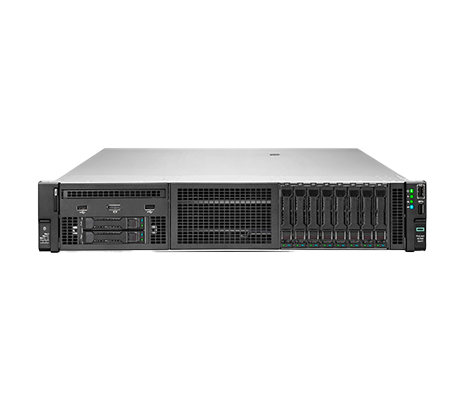
Azure Local handles compute, storage, and networking — running on hardware you control, whether in your own data center, a co-location facility, or in partnership with a local managed service provider.
Microsoft 365 Local extends the productivity tools your teams already use — Exchange, Teams, SharePoint — into that same sovereign boundary. Email, collaboration, and document management stay within your defined perimeter.
Foundry Local brings AI inference and model deployment into the stack, allowing organizations to run AI workloads without data leaving their controlled environment.
All three tiers operate across three deployment modes: fully connected (standard cloud-linked operation), intermittently connected (for sites with unreliable internet), and air-gapped (fully isolated from public internet). For Philippine organizations with branch offices in provincial locations — or those subject to strict government data classification policies — the intermittent and air-gapped modes carry real operational weight.
Why This Matters for Philippine Enterprises
The Philippines' Data Privacy Act (Republic Act 10173) requires organizations to implement reasonable and appropriate measures to protect personal data. The data loss prevention controls available in Microsoft 365 complement these sovereignty guarantees at the application layer. For regulated industries, this has meant navigating a persistent tension between cloud efficiency and compliance posture.
Bangko Sentral ng Pilipinas circulars on technology risk management for BSP-supervised financial institutions demand documented oversight of data locations, access controls, and incident response. Healthcare organizations under PhilHealth or DOH-affiliated programs face similar audit trails and data classification requirements.
The Sovereign Private Cloud stack gives IT teams a concrete technical architecture to point to when compliance asks: "Where is our data, and who controls it?"
Critically, this is not only about data location — it is about policy consistency. When Azure Local, M365 Local, and Foundry Local are deployed as a unified stack, you get a single control plane for identity, access, and governance, enforced the same way whether your users are in Makati or Cebu.
Three Use Cases Worth Prioritizing
Banking and financial services. BSP-supervised institutions that have deferred migrating core workloads because of data residency concerns now have a Microsoft-supported path to hybrid cloud infrastructure with documented sovereignty controls.
Government contractors and DICT-aligned agencies. Philippine government bodies and their technology partners are increasingly required to demonstrate that sensitive data does not traverse foreign cloud regions. A locally deployed Azure stack satisfies this requirement directly.
Healthcare and insurance. Patient records, claims data, and actuarial models contain highly sensitive personal information. Sovereign deployment means these workloads gain enterprise-grade security and Microsoft's compliance tooling without exposing data to shared public cloud infrastructure.
What to Do Right Now
Audit your current cloud footprint. Identify which workloads are on public cloud, which are on-premises, and which sit in a grey zone of unmanaged local servers. That inventory is the prerequisite for any sovereign cloud planning conversation.
Map your compliance obligations. Which workloads are subject to BSP, NPC, DOH, or government procurement data requirements? This determines the priority sequence for migration.
Engage a managed cloud partner that understands both the Microsoft stack and Philippine regulatory context. The technology is available — the gap most organizations face is implementation expertise and ongoing governance. The right partner bridges both.
Technica manages Azure and Microsoft 365 environments for Philippine businesses, with direct experience navigating local compliance requirements. If you are assessing whether sovereign cloud fits your organization's risk profile, we can help you build the business case and the architecture.
Related reading: Data Loss Prevention for Philippine Businesses · Microsoft's Southeast Asia Cloud Investment · ISO 27001 Certification in the Philippines
Talk to our Cloud & I.T. team →