Azure OpenAI vs. Google Vertex AI: Which Platform Should Philippine Developers and Enterprises Use?
As Philippine organisations move from AI experimentation to production deployment, the platform decision becomes consequential. Azure OpenAI Service and Google Vertex AI are the dominant enterprise AI infrastructure choices for the Philippine market — and the choice between them is not obvious. Both provide access to frontier models, enterprise-grade security, and regional data residency options. The differences lie in model access, ecosystem fit, pricing, and where each platform has deeper integration with existing enterprise software.
This article covers confirmed platform capabilities as of June 2026.
Model Access
Azure OpenAI Service
Azure OpenAI provides exclusive enterprise access to OpenAI's model family through Microsoft's cloud infrastructure:
- GPT-4o and GPT-4o mini — Generally available, multimodal (text + image input)
- GPT-4 Turbo — Available with 128K context window
- o1 and o1-mini — OpenAI's reasoning models, available to Azure enterprise customers
- o3-mini — Available in Azure AI Foundry
- DALL-E 3 — Image generation, generally available
- Whisper — Speech-to-text, generally available
- Text embedding models — ada-002 and newer embedding models for RAG and semantic search
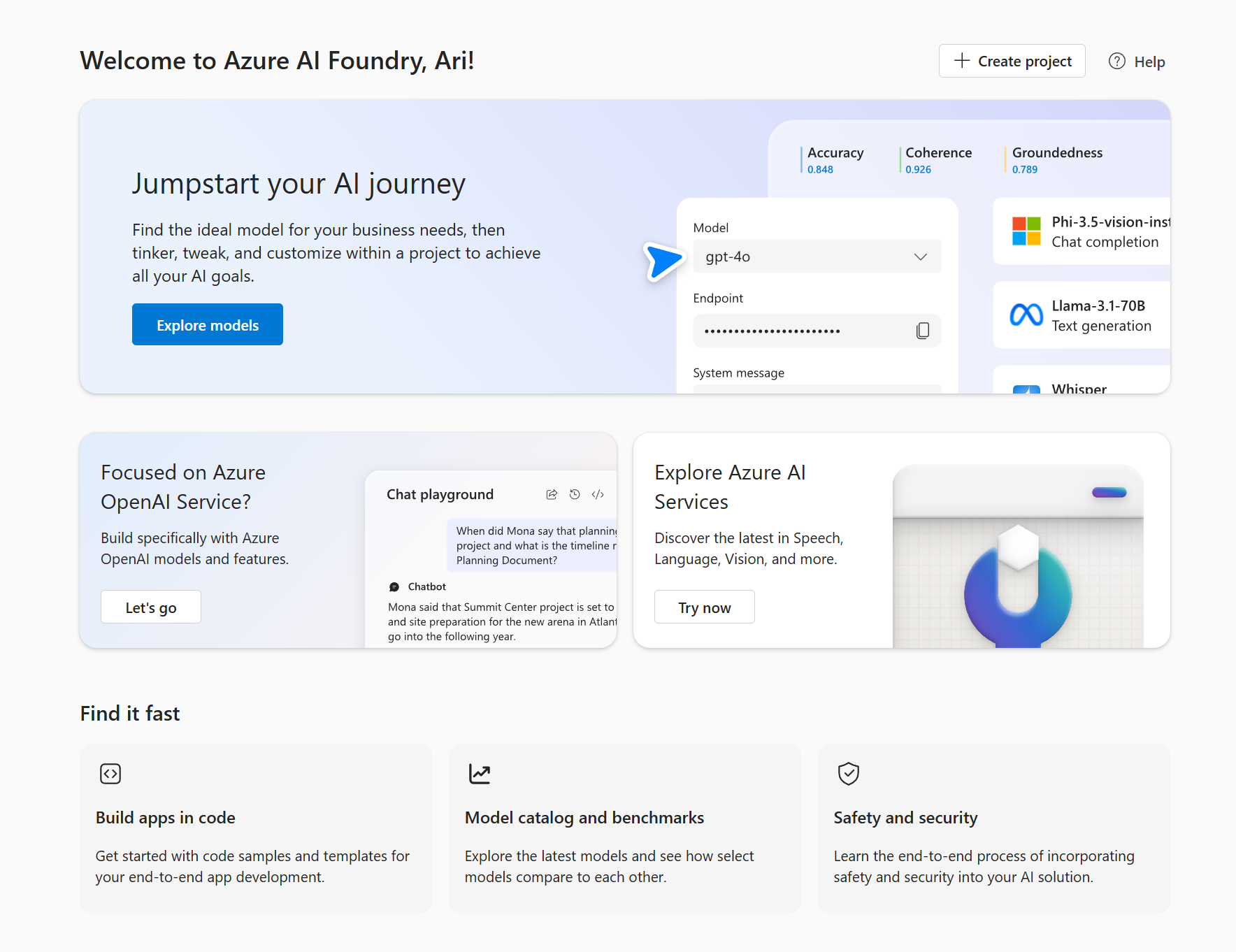
Azure AI Foundry (announced at Microsoft Build 2026) is the unified platform layer on top of Azure OpenAI — it provides model catalogue access, prompt flow orchestration, evaluation, fine-tuning, and agent deployment tooling.
Google Vertex AI
Vertex AI provides access to Google's model family plus a broader model garden:
- Gemini 3.1 Pro and Flash — Generally available as of Google Cloud Next '26 (April 2026)
- Gemini 2.5 Pro and Flash — Available in Vertex AI
- Imagen 3 — Image generation
- Chirp — Speech-to-text
- Text embedding models — textembedding-gecko and newer
- Model Garden — Access to open-source models including Llama 3, Mistral, and others, deployable on Vertex AI infrastructure
The TPU 8i announced at Cloud Next '26 (288 GB HBM, 80% better inference cost vs prior generation) makes Vertex AI inference significantly cheaper for high-volume workloads.
Verdict on model access: Azure OpenAI provides the GPT-4 and o1/o3 family. Vertex AI provides the Gemini 3.1 family plus open-source model access. If your application is built around OpenAI models, Azure is the only enterprise path. If Gemini is the preferred model family, Vertex is the native platform.
Regional Data Residency
Both platforms offer data residency options relevant to Philippine enterprises with data sovereignty requirements.
Azure: Southeast Asia region (Singapore) is available and commonly used by Philippine enterprises. Data processed through Azure OpenAI in the SEA region stays within that geography. Australia East is the secondary option.
Google Cloud: Asia-Pacific regions available including Singapore (asia-southeast1) and Taiwan (asia-east1). Vertex AI model inference in these regions keeps data within the region.
For Philippine enterprises in regulated industries (banking, healthcare, BPO handling sensitive client data), both platforms provide the regional options needed for NPC and DICT compliance requirements. Neither platform has a Philippines-local region — Singapore is the closest available for both.
Pricing Structure
Azure OpenAI
Azure OpenAI is priced per token (input and output separately):
| Model | Input (per 1M tokens) | Output (per 1M tokens) |
|---|---|---|
| GPT-4o | $2.50 | $10.00 |
| GPT-4o mini | $0.15 | $0.60 |
| o1 | $15.00 | $60.00 |
| o3-mini | $1.10 | $4.40 |
Provisioned throughput (PTU) allows reserved capacity at predictable cost — relevant for high-volume production deployments where token pricing creates unpredictable bills.
Google Vertex AI (Gemini)
| Model | Input (per 1M tokens) | Output (per 1M tokens) |
|---|---|---|
| Gemini 3.1 Pro | $1.25 | $5.00 |
| Gemini 3.1 Flash | $0.075 | $0.30 |
| Gemini 2.5 Flash | $0.15 | $0.60 |
Vertex AI also supports committed use discounts for sustained workloads, and the TPU 8i infrastructure improvements announced at Cloud Next '26 are expected to reduce inference costs further through 2026.
Verdict on pricing: For equivalent capability tiers, Gemini Flash is meaningfully cheaper than GPT-4o mini. For reasoning workloads, o3-mini is cheaper than o1 but Vertex has no direct equivalent to the o-series reasoning models. High-volume, cost-sensitive applications favour Vertex AI on price; applications requiring OpenAI-family model quality have no cost-equivalent alternative on Azure.
Integration with Existing Enterprise Software
This is where the decision most often resolves for Philippine enterprises.
If your organisation runs Microsoft 365:
Azure AI Foundry, Copilot Studio, and Azure OpenAI integrate natively with the M365 ecosystem. Copilot Studio agents built on Azure OpenAI have direct access to SharePoint, Teams, Outlook, and Dynamics data through Microsoft Graph. The governance layer (Entra ID, Purview, DLP) is consistent across AI workloads and standard M365 workloads. If your users are in Teams and your data is in SharePoint, Azure OpenAI is the natural extension of your existing estate. See our Copilot Studio guide for Philippine businesses for what you can build on top of it.
If your organisation runs Google Workspace:
Vertex AI and Gemini integrate natively with Google Workspace, BigQuery, and Google Cloud services. The Knowledge Catalog (Agentic Data Cloud, announced Cloud Next '26) grounds AI agents in enterprise semantic context. If your data is in BigQuery and your users are in Google Workspace, Vertex AI is the natural extension.
For net-new AI applications (no existing cloud estate preference):
Both platforms have mature LangChain, LlamaIndex, and REST API integrations. The choice reduces to: which model family do your developers prefer, and which platform's IAM and monitoring tooling aligns with your operations team's skills.
Compliance and Enterprise Controls
Both platforms provide enterprise-grade controls relevant to Philippine regulatory context:
| Capability | Azure OpenAI | Vertex AI |
|---|---|---|
| Data not used for model training | ✓ | ✓ |
| Customer-managed encryption keys | ✓ | ✓ |
| Private endpoints / VPC Service Controls | ✓ | ✓ |
| Audit logs | ✓ | ✓ |
| Content filtering / safety classifiers | ✓ | ✓ |
| Fine-tuning on own data | ✓ | ✓ |
| Responsible AI / model cards | ✓ | ✓ |
Neither platform has Philippine-specific compliance certifications beyond what applies to their Singapore-region infrastructure. Both are ISO 27001, SOC 2 Type II certified.
Which Platform for Which Philippine Use Case
| Use Case | Recommended Platform |
|---|---|
| M365-integrated agent (SharePoint, Teams, Outlook data) | Azure OpenAI / Copilot Studio |
| Google Workspace-integrated agent | Vertex AI / Gemini |
| High-volume, cost-sensitive inference (customer support bot, document classification) | Vertex AI (Gemini Flash) |
| Complex reasoning tasks requiring o1/o3 capability | Azure OpenAI |
| RAG over BigQuery or Google Cloud data | Vertex AI |
| RAG over SharePoint or Azure Blob storage | Azure OpenAI |
| Open-source model deployment (Llama, Mistral) | Vertex AI Model Garden |
| BPO AI augmentation on M365 Copilot for Service | Azure OpenAI |
For Philippine organisations evaluating Azure OpenAI or Google Vertex AI for a specific use case, get in touch.
Related reading: AI Model Comparison: o3 Mini vs Claude Sonnet 4.5 vs Gemini 2.5 Flash · Fine-Tuning vs RAG: Which AI Customisation Approach Should Philippine Enterprises Use? · Microsoft Copilot Studio: Building Custom AI Agents Without Code
Talk to our Cloud & I.T. team →